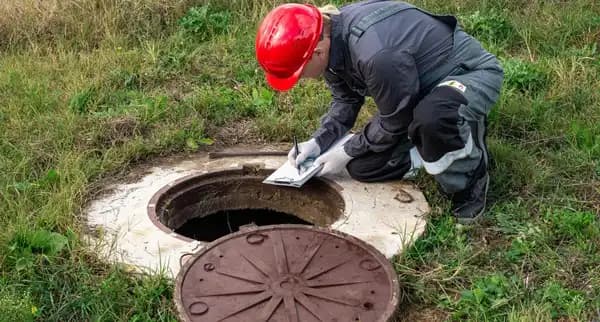
Septic Squad providing septic system inspections at a Leander, Texas property
Williamson County

Septic Inspectionsin Leander, Texas

Inspections for Leander acreage and newer builds — with particular care on the western properties where a private well and a septic system share the same ground.

Septic Inspections in Leander

What to expect before you book.

County
Williamson
Permits
WCCHD
Report
Same day
Critical for
Well properties
Call (512) 729-5861
Same-day windowsacross Williamson County
Licensed & insuredTexas OSSF compliant disposal
5.0 from 249 reviewsLocally owned, 10 years
Local knowledge

Septic System Inspections in Leander, Texas

There is one circumstance that changes a septic inspection from useful to essential, and a great many Leander properties are in it: a private well and a septic system on the same piece of land. West and northwest of town, where the country climbs into genuine Hill Country and municipal service does not reach, that combination is ordinary. It means the water you drink and the wastewater you dispose of are separated by nothing but distance and the condition of your dispersal field. A failing drainfield or a poorly sited spray field on a property with municipal water is an expense and a nuisance. On a well property it is a different category of problem entirely.

The separation distances between the well, the tank and the dispersal area are part of the permitted design rather than a guideline, and they exist for exactly this reason. They are also easy to compromise without meaning to. Building over a drainfield, paving across it, planting something substantial on it, or extending a driveway through a spray zone are all things owners do in good faith without realising the layout was deliberate. If you are planning any site work on a well-and-septic property, the permitted layout is worth pulling from the Williamson County & Cities Health District first — it is a short errand that prevents an expensive and occasionally serious mistake.

The second Leander pattern is about age, and it catches people who assume a newer house means a system they can ignore. Leander built out extraordinarily fast, which means a very large number of aerobic systems went in during the same relatively narrow window. Air pumps, control panels and chlorinators have finite service lives that run on calendar time regardless of how new the house feels, so those components are now reaching replacement age across the area at roughly the same moment. Plenty of owners inherited a system with the house, have never had anyone explain it, and have never had the equipment looked at. If that describes you, the inspection is overdue rather than premature.

Why Leander calls Septic Squad

A lot of Leander owners have an aerobic system they have never had explained to them, so we do that: what you actually have, what condition each component is in, what will need replacing and roughly when. On well-and-septic properties we take the spacing and dispersal questions seriously rather than treating them as paperwork, because the consequences of getting them wrong land on your own drinking water rather than on somebody downstream. You get photographs, condition notes and a plain account of what needs attention now.

The essentials

Septic Inspections in Leander: what to know

Wells

Your water and your wastewater share a property

On the western acreage a private well alongside the septic system is the normal arrangement, and the separation distances between well, tank and dispersal area are part of the permitted design rather than a recommendation. That makes dispersal-field condition a water-quality question for your own household, not just a maintenance item. Any sign of a field failing deserves an immediate response rather than a scheduled one.

Before you build

Do not build, pave or plant over the field

Extending a driveway, adding a structure or putting in substantial landscaping over a drainfield or spray zone is something owners do in complete good faith, because nothing on the surface says otherwise. The layout was permitted deliberately. Pull the permitted design from the Williamson County & Cities Health District before site work on a well-and-septic property — it is a short errand that avoids a long problem.

Equipment age

A newer house is not a newer system

Leander built out fast, so an unusually large number of aerobic systems went in within the same window and their components are reaching replacement age together. Aerators run continuously and wear on calendar time whatever the occupancy; chlorinators deplete; control floats stick. If you bought a newer home with a system nobody has explained and nobody has inspected, the equipment is probably further through its life than the house's age suggests.

What you get

What a Leander visit covers

Separation and layout on well properties

Where the well, tank and dispersal area actually sit relative to each other, read against the permitted design.

Dispersal field condition

Walked for pooling, dead heads and surfacing — which on a well property is a drinking-water question rather than a cosmetic one.

Aerator, chlorinator and panel

Whether the air pump is genuinely moving air, the chlorinator is dosing, and the controls and floats are working.

Remaining component life

Not only what has failed. On equipment installed in the same boom as half the neighbourhood, what is close to done is the useful answer.

Tank and sludge line

Structure, lid and accessible components, with sludge measured against the outlet rather than estimated.

An honest limitation

We do not perform LCRA inspections or assess electronic components and mechanical pump systems — worth saying plainly in an aerobic-heavy market. Tell us at booking if that is what you need.

Questions

Septic Inspections in Leander: common questions

I have a well and a septic system. What should I watch for?

Separation distances between the well, the tank and the dispersal area are part of the permitted design and exist to protect your water supply. Do not build, pave or plant over a drainfield or spray field, and treat any sign of dispersal-field failure as urgent rather than routine. If you are unsure of the permitted layout, the Williamson County & Cities Health District holds the record for your address — worth having before you plan any site work.

My Leander home is fairly new. Does the septic need attention already?

Quite possibly, and this catches a lot of owners out. A great many systems here went in during the same construction boom, so components across the area are reaching replacement age together. Air pumps and control equipment wear on calendar time regardless of how new the house feels or how lightly it is used. If nobody has inspected the equipment since you moved in, it is worth doing now rather than after an alarm.

Nobody ever explained my aerobic system to me. Can you?

That is a normal request here and a reasonable one. Plenty of Leander owners inherited a system with the house and have never been told what it is, what it needs or what the panel means. We will establish what you have, walk you through what each component does, tell you what condition it is in and what will need replacing and roughly when. It is the part of the visit most owners find genuinely useful.

Can I put a driveway or a shed over part of my yard?

Not over the drainfield or spray zone, and the difficulty is that nothing on the surface marks where those are. Compaction and cover both interfere with dispersal, and on a well property a compromised field is a water-quality issue for your own household. Check the permitted layout with the county health district before you commit to site work — it costs an email and prevents a genuinely expensive mistake.

Can you reach properties on long drives west of Leander?

Yes. Long private drives and tanks set well back from drivable ground are routine on the western acreage, and we work from extended hose wherever the truck can safely stand. On well-and-septic properties we are also deliberate about where the truck sits and where hose runs, for obvious reasons. Mention the approach and rough tank location when you book and we will arrive with the right equipment.

How often should a Leander system be inspected?

The tank generally needs pumping every three to five years, but the aerobic components need checking far more often than that — aerators, chlorinators and floats all have shorter lives than the tank. A system pumped on schedule but never equipment-checked is only half maintained, and on a well property the half being skipped is the half that protects your water.

Nearby

Other areas we serve

Communities close to Leander, each with its own local guide.

Call Now💬 Get an Estimate
Book Online