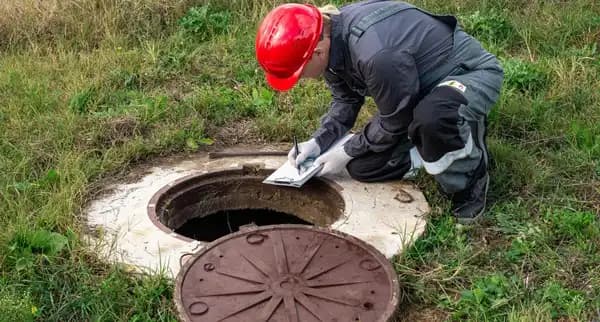
Septic Squad providing septic system inspections at a Round Rock, Texas property
Williamson County

Septic Inspectionsin Round Rock, Texas

Inspections for the Round Rock properties still on septic — acreage tracts and outlying parcels the sewer network never reached.

Septic Inspections in Round Rock

What to expect before you book.

County
Williamson
Permits
WCCHD
Report
Same day
Useful for
Sewer decisions
Call (512) 729-5861
Same-day windowsacross Williamson County
Licensed & insuredTexas OSSF compliant disposal
5.0 from 249 reviewsLocally owned, 10 years
Local knowledge

Septic System Inspections in Round Rock, Texas

Round Rock is a sewered city with septic pockets in it, and that shapes everything about being an owner here. Most of the city is connected, so the assumption in the room is usually that septic barely exists locally — which leaves the people who are on it feeling like an afterthought, including to septic companies that treat the whole of Williamson County as an occasional trip out from Austin. The properties that remain on systems are mostly acreage, older homesteads and outlying tracts toward the eastern and northern edges, where the network simply did not extend at the same pace as the subdivisions a mile away.

That creates a question no other city in our service area faces in the same way: whether and when to connect. As mains extend, owners are periodically asked to weigh a connection cost against keeping and maintaining what they have, and that decision is routinely made on incomplete information — usually an assumption that an old system must be near the end of its life. Frequently it is not. An inspection is how you replace that assumption with a condition assessment and a realistic estimate of remaining service life, which is the piece most owners are missing when they make the call. We cannot tell you whether connecting is the right financial choice. We can tell you honestly what you would be walking away from.

There is a geological wrinkle here too. Round Rock sits near the boundary between the Blackland Prairie to the east and the Edwards Plateau to the west, and properties on either side behave differently. Eastern tracts contend with the same shrink-swell clay that shapes Pflugerville, with the seasonal ground movement and slow drainage that come with it. Western parcels run into shallower soil over limestone and lean aerobic. One inspection framework does not fit both, and which side of that line you are on matters more than the address suggests. Permitting for anything outside the sewer network runs through the Williamson County & Cities Health District under TCEQ Chapter 285.

Why Round Rock calls Septic Squad

We treat Round Rock as a market rather than a detour, which matters most on the acreage tracts where nobody has looked properly in years and where the paperwork is patchy. We locate the tank, establish what is actually installed rather than what the file says, assess it against the ground it sits on, and give you a straight read on remaining service life. If a connection decision is anywhere on your horizon, that read is the number you are missing — and we have nothing to gain from talking it up or down.

The essentials

Septic Inspections in Round Rock: what to know

Which side

The prairie meets the plateau here

Eastern and northern tracts on deeper prairie soils generally run conventional anaerobic tanks with gravity drainfields, many installed decades ago when the land was farmed, and they carry the clay problems Pflugerville does — seasonal movement and slow drainage. Properties west, where soil thins over limestone, are more likely to run aerobic treatment with spray dispersal. Newer installations anywhere here skew aerobic simply because that is what current site evaluations tend to support.

Records

Williamson County & Cities Health District

The health district administers the On-Site Sewage Facility programme for the county under TCEQ Chapter 285. Any alteration to the tank, drainfield or disposal method needs a permit; routine pumping does not. On older rural tracts it is not unusual to find a system that has been extended or partially repaired over the years without complete documentation, which is exactly why an inspection tells you more here than a records search does.

On site

Finding a tank nobody recorded

The practical problem in Round Rock is simply locating the thing. On tracts that were farmed before they were subdivided, lids are frequently unmarked, buried and undocumented, and previous owners had no particular reason to write it down. We trace the line from the house with a flushable probe rather than opening test holes across your land. Eastern properties on clay share Pflugerville's seasonal ground conditions, so truck approach after heavy rain wants planning.

What you get

What a Round Rock visit covers

Locating an undocumented tank

Traced from the house with a flushable probe. On former farm tracts this is routinely the first half of the job.

What is actually installed

Established on site rather than taken from a file that may not reflect extensions or repairs made over the years.

Assessment matched to your ground

Drainfield condition on an eastern clay tract; aerator, chlorinator and spray zone on a western aerobic system.

Sludge and baffle condition

Measured against the outlet, since that is what tells you whether solids have begun reaching the field.

Remaining service life, honestly

The figure that is usually missing when someone is weighing a sewer connection against keeping what they have.

An honest limitation

We do not perform LCRA inspections or assess electronic components and mechanical pump systems. Mention it at booking if that is your requirement.

Questions

Septic Inspections in Round Rock: common questions

Should I connect to city sewer or keep my Round Rock septic system?

That is a financial decision that depends on connection cost, how long you plan to stay, and the actual condition of what you have. We cannot make the call for you, and we have no stake in it either way. What we can supply is the missing piece: a real assessment of your system's condition and roughly how much service life is left in it. A great many owners assume an old system must be nearly finished, and a fair number of those assumptions turn out to be wrong.

Is my Round Rock property even on septic?

Much of the city is on municipal sewer, but acreage tracts and outlying properties — particularly toward the eastern and northern edges — frequently are not. If your utility bill carries no wastewater charge, or there is a lid or spray heads somewhere in the yard, you are on septic. It genuinely catches people out when they buy here, because the surrounding neighbourhood may be entirely connected.

Can you find a tank with no records and no visible lid?

Yes, and on Round Rock's former farm tracts it is the normal case. We use a flushable probe to trace the line from the house to the tank, which locates it without digging exploratory holes across the property. Once it is found, fitting a riser makes every future service straightforward and removes the problem permanently.

Who permits septic work in Round Rock?

The Williamson County & Cities Health District, which runs the On-Site Sewage Facility programme for the county under TCEQ Chapter 285. Anything that alters the tank, the drainfield or the disposal method requires a permit through them. Routine pumping does not. Their file for your address is also the best starting point for establishing what was originally installed.

Does the east side of town really differ from the west?

Meaningfully, yes. Round Rock sits near the boundary between the Blackland Prairie and the Edwards Plateau. East, you have deeper clay soils that drain slowly and move seasonally, which stresses tank connections and gives a drainfield little margin. West, soil thins over limestone and aerobic treatment with spray dispersal becomes the practical option. Two properties a few miles apart can need quite different assessments.

How often should a Round Rock system be inspected?

Every one to three years, and always before buying. On the eastern clay tracts the shorter end is the better bet, for the same reason it is in Pflugerville — slow-draining ground is unforgiving once solids start reaching the field, and that process does not reverse.

Nearby

Other areas we serve

Communities close to Round Rock, each with its own local guide.

Call Now💬 Get an Estimate
Book Online