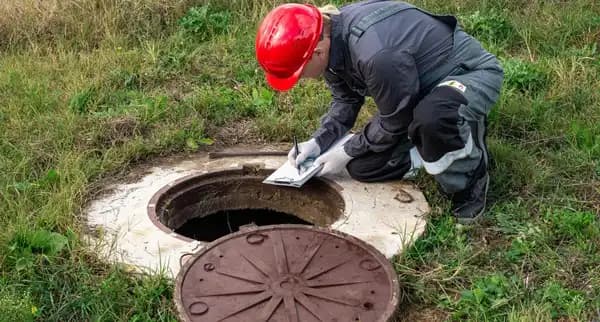
Septic Squad providing septic system inspections at a Georgetown, Texas property
Williamson County

Septic Inspectionsin Georgetown, Texas

Inspections across Georgetown's rural acreage — from the old farm systems on the eastern prairie to aerobic units on the hillside west of the river.

Septic Inspections in Georgetown

What to expect before you book.

County
Williamson
Permits
WCCHD
Report
Same day
Depends on
East or west
Call (512) 729-5861
Same-day windowsacross Williamson County
Licensed & insuredTexas OSSF compliant disposal
5.0 from 249 reviewsLocally owned, 10 years
Local knowledge

Septic System Inspections in Georgetown, Texas

Georgetown is large enough to be two septic markets wearing one name, and the San Gabriel River is roughly where one becomes the other. That is not a technicality. It means generic advice about septic systems is close to useless here, and a recommendation that is sensible for a five-acre tract on the eastern prairie can be actively wrong for a hillside property west of town.

East of the river the ground runs out into deep Blackland Prairie farmland, and the systems on those large agricultural tracts are conventional — a tank and a gravity drainfield — frequently installed generations ago. The thing worth saying plainly about them is that they are often considerably older than the current owner believes. Properties change hands, the installation predates permitting practice, nobody wrote anything down, and a system that has worked quietly for fifty years acquires a reputation for being fine. Many of them genuinely are. But at that vintage, baffle deterioration and drainfield exhaustion are realistic rather than theoretical, and neither gives warning: the system performs normally until the day it does not.

West of the river the land climbs toward the Edwards Plateau. Soil thins over limestone, parts of the landscape sit over aquifer recharge features, and the practical consequence is that conventional drainfields are largely off the table — site evaluations in constrained areas support aerobic treatment with surface dispersal instead. An inspection there is about equipment and spray field rather than about soil acceptance, and if a system ever needs replacing, what you would be permitted to install is narrower than it is on the eastern side.

Permitting for anything outside the sewer network runs through the Williamson County & Cities Health District under TCEQ Chapter 285. On older eastern systems, permit records are frequently thin — normal for their age, and much better established before a sale than during one.

Why Georgetown calls Septic Squad

We arrive knowing which conversation we are having, which in a city this size genuinely saves you money. On eastern acreage that means assessing a system nobody has examined closely in years: baffle condition, tank structure, and whether the drainfield still accepts flow at a useful rate. On the western side it means aerobic equipment and thin-soil dispersal — aerator, chlorinator, panel and spray zone. Same company, two different jobs, and we would rather establish which one yours is on the phone than work it out in your driveway.

The essentials

Septic Inspections in Georgetown: what to know

Two Georgetowns

The river is roughly the dividing line

East of the San Gabriel, deep prairie soil supports conventional tanks with gravity drainfields, many of them old and on large agricultural parcels. West, the ground climbs toward the plateau, soil thins over limestone, recharge features appear, and aerobic treatment with surface dispersal becomes the practical and often the only permitted option. Which side you are on determines what an inspection is actually examining and what your options would be if the system needed replacing.

Eastern systems

Usually older than the owner thinks

On the eastern farmland it is common to find a conventional system installed generations ago, on a property that has changed hands several times since, with no record because the installation predates current permitting. Decades of quiet service build a reputation for reliability that is sometimes deserved and sometimes just luck. At that age the two things that go are the baffles and the drainfield, and both fail without notice.

On site

A genuinely large service area

Georgetown covers a lot of ground, and rural tracts on the eastern side often involve long approaches from the road. Tanks on legacy farm properties are frequently unmarked and buried without risers, so locating is routinely part of the visit rather than a preliminary to it. Western hillside properties bring slope and hose-run considerations instead. Wet conditions on eastern pasture make heavy-vehicle access unwise for a period after significant rain.

What you get

What a Georgetown visit covers

The right assessment for your side of the river

Drainfield and baffle condition on an eastern conventional system; aerator, chlorinator, panel and spray zone on a western aerobic one.

Locating an unrecorded tank

Traced from the house with a flushable probe on farm tracts where nothing was ever marked or documented.

Tank structure at genuine age

Walls, lid and baffles on systems that may be five decades old and have never been opened for a proper look.

Sludge measured against the outlet

The evidence that tells you whether solids have begun escaping toward a drainfield that cannot be repaired.

What replacement would actually involve

Particularly west of the river, where recharge features and thin soil narrow what a site evaluation would support.

An honest limitation

We do not perform LCRA inspections or assess electronic components and mechanical pump systems. Mention it at booking if that is your need.

Questions

Septic Inspections in Georgetown: common questions

My rural Georgetown system is very old. Is that a problem?

Not automatically. Conventional tanks on the eastern farmland have often been working for decades and a great many remain structurally sound. Age is not the verdict — condition is. What we check is baffle integrity, tank structure and whether the drainfield still accepts flow properly. What makes age relevant is that systems of that vintage tend to fail suddenly once one of those goes, so an honest assessment is worth considerably more than a pump-out on its own.

Why do western Georgetown properties need aerobic systems?

Because the ground west of the San Gabriel thins over limestone and includes aquifer recharge features, which limits what a conventional drainfield can safely do. Aerobic units treat effluent to a much higher standard before dispersing it at the surface, and that is what site evaluations in constrained areas typically support. It also means your replacement options are narrower there than on the eastern side.

Does it really matter which side of town I am on?

More than almost anywhere else we work. Georgetown is large and genuinely varied, and advice that suits a five-acre tract on the eastern prairie can be actively wrong for a hillside property west of the river. Different system types, different failure modes, different siting rules if anything ever needs replacing. It is the first thing we establish.

There are no permit records for my system. Is that a problem for a sale?

Common on the eastern tracts and usually resolvable, but far easier handled early. The Williamson County & Cities Health District holds whatever exists for the address, and systems predating current permitting practice frequently have thin records or none. A buyer's inspector asking for a file that was never created is an awkward moment to discover the gap.

Do you cover properties well outside Georgetown proper?

Yes. A large share of Georgetown's septic population sits on acreage well beyond the developed core, and those properties are a normal part of our route rather than an exception to it. Long drives and pasture approaches are routine — telling us about access when you book means we arrive prepared rather than reorganising on site.

How often should a Georgetown system be inspected?

Every one to three years, and always before buying. On the older eastern systems the case for inspecting even when pumping is not yet due is strong, because the failures that matter at that age develop silently and the drainfield is not repairable once it has gone.

Nearby

Other areas we serve

Communities close to Georgetown, each with its own local guide.

Call Now💬 Get an Estimate
Book Online