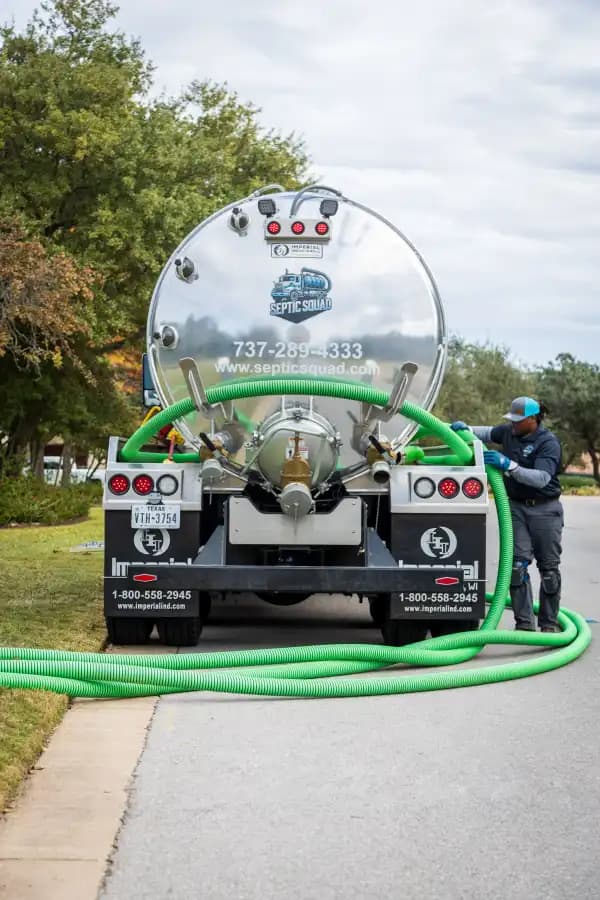
Septic Squad providing emergency septic pumping at a Leander, Texas property
Williamson County

Emergency Septic Servicein Leander, Texas

Alarms, backups and dispersal failures across Leander — answered by a person at any hour, and treated with the urgency a well property deserves.

Emergency Pumping in Leander

What to expect before you book.

Availability
24/7, 365
Answered by
A real person
Response
Same day
County
Williamson
Call (512) 729-5861
Same-day windowsacross Williamson County
Licensed & insuredTexas OSSF compliant disposal
5.0 from 249 reviewsLocally owned, 10 years
Local knowledge

Emergency Septic Pumping in Leander, Texas

Surfacing effluent is always a problem. On a Leander property with a private well it is an urgent one, and that is the thing most worth saying on this page. Across the western and northwestern acreage, the household's drinking water comes from the same ground the dispersal field sits on, separated by permitted distances that assume the field is working. When a spray zone starts pooling or a drainfield begins surfacing, the assumption underpinning that separation is no longer holding. It is not a matter of inconvenience or smell. Treat it as something to act on the day you notice it, not the week.

Most Leander emergencies begin at the control panel rather than in the house, because most systems here are aerobic. The common causes are a burnt-out air pump, a chlorinator that emptied months ago, a float that has stuck, or a panel alarming after a power cut that nobody reset. What makes these difficult is that none of them produce an indoor symptom — taps run, toilets flush, and the system stops treating quietly. The wave of equipment failures arriving across Leander at the moment is not coincidence either: a great many of these systems were installed in the same construction boom and their components are reaching the end of their service lives together.

On the older acreage nearer the eastern side, where soil runs deeper and conventional tanks with gravity drainfields are more common, the failure looks more familiar — a backup into the house after the field stops accepting flow.

While you wait, stop using water. On a well property, keep everyone well clear of any wet ground near the dispersal area, and if you have any reason to suspect your water supply has been affected, stop drinking it until you have had it tested. If you can safely reach the panel, note which alarm is showing before silencing it.

Why Leander calls Septic Squad

We take a dispersal failure on a well property at the urgency it actually warrants rather than slotting it in as a routine call, and we will say plainly when pumping has not solved the underlying problem. On an aerobic system the honest answer is frequently that the tank is now empty and the aerator is still dead, which means the system is still not treating — and on a property drawing its own water, that distinction is not academic. We also carry a realistic view of access out west: long drives, slope, and tanks a long way from anywhere a truck can stand.

The essentials

Emergency Pumping in Leander: what to know

Well properties

Surfacing effluent is urgent here

Where the household draws its own water, a dispersal field that has started surfacing or pooling undermines the separation the permitted design relies on. That moves it out of the nuisance category. Keep people and animals off the affected ground, act the same day rather than the same week, and if you have reason to think the supply may be affected, stop drinking it until it has been tested.

Aerobic failures

Nothing indoors tells you

A dead air pump, an empty chlorinator or a stuck float stops the treatment process without changing anything at the taps. Many panels alarm on water level rather than on aeration, so a system can be out of treatment for weeks before anyone reacts. With so many Leander systems installed in the same window, these failures are arriving in waves rather than one at a time. If you cannot hear the aerator running, that is the emergency.

Getting there

Long drives and slope out west

Western Leander brings the usual Hill Country considerations — long private drives, grade, and tanks sited well back from anywhere a loaded truck can safely stand. Extended hose runs cover most of it. On well-and-septic properties we are deliberate about where the truck sits and where hose runs. Tell us the approach and roughly where things are when you call and the visit starts properly on arrival.

What you get

What a Leander visit covers

A person answering, any hour

Nights, weekends and holidays are ordinary working time rather than an exception with a queue attached.

Same-day attendance

With a window that reflects the drive out to the western acreage rather than one that sounds better on the phone.

Dispersal failures treated as urgent

On a well property, a surfacing field is a water-quality problem and gets prioritised as one.

Complete removal

The full tank rather than a skim, which on a system that has stopped dispersing simply defers the next call.

Equipment assessed while open

Aerator, chlorinator, floats and spray zone — so you know whether pumping solved it or bought time.

Approved disposal, documented

Everything removed goes to approved Texas facilities, with a record of the visit.

Questions

Emergency Pumping in Leander: common questions

Effluent is surfacing and we are on a well. What do we do?

Treat it as urgent. Stop using water, keep everyone and any animals off the wet ground, and call. On a property drawing its own water, a dispersal field that has started surfacing undermines the separation the permitted design depends on, which puts it in a different category from the same fault on a municipal supply. If you have any reason to suspect the supply is affected, stop drinking it until it has been tested.

My aerobic alarm is going off. How urgent is it?

Urgent until you know which alarm it is. A high-water alarm means flow is outpacing dispersal or a pump has failed, and a backup can follow. An aerator fault means treatment has stopped — quieter indoors, and the one that matters more if you are on a well. Silencing the alarm changes nothing either way. Note what the panel shows and tell us when you call.

I cannot hear the aerator. Is that the problem?

Very likely, and it is one of the most common faults we find here. A silent air pump means the system is no longer treating, and because nothing changes indoors it often runs that way for weeks before anyone notices. Given how many Leander systems went in during the same boom, these failures are currently arriving in clusters across the area rather than in isolation.

Do you come out to the western acreage at night?

Yes, we run 24 hours a day, every day. What we will do is give you a window that reflects the actual drive and the access rather than an optimistic one. Long private drives, grade and a tank set well back from drivable ground are normal out there — telling us about the approach on the call is what makes the visit efficient.

Will pumping fix it?

Only if the tank was the problem. On most Leander systems the fault is equipment, and pumping empties the tank while the aerator stays dead and the system stays out of treatment. We will tell you which situation you are in rather than let working plumbing imply the matter is closed — particularly on a well property, where a system that is not treating is not something to leave sitting.

Do you handle the repair?

No, we pump. Given that the answer here is so often a new air pump, a chlorinator or control work, we would rather be clear about that up front than have you assume otherwise. We will pump the system, document what we found and point you toward local contractors who fit that equipment properly.

Nearby

Other areas we serve

Communities close to Leander, each with its own local guide.

Call Now💬 Get an Estimate
Book Online