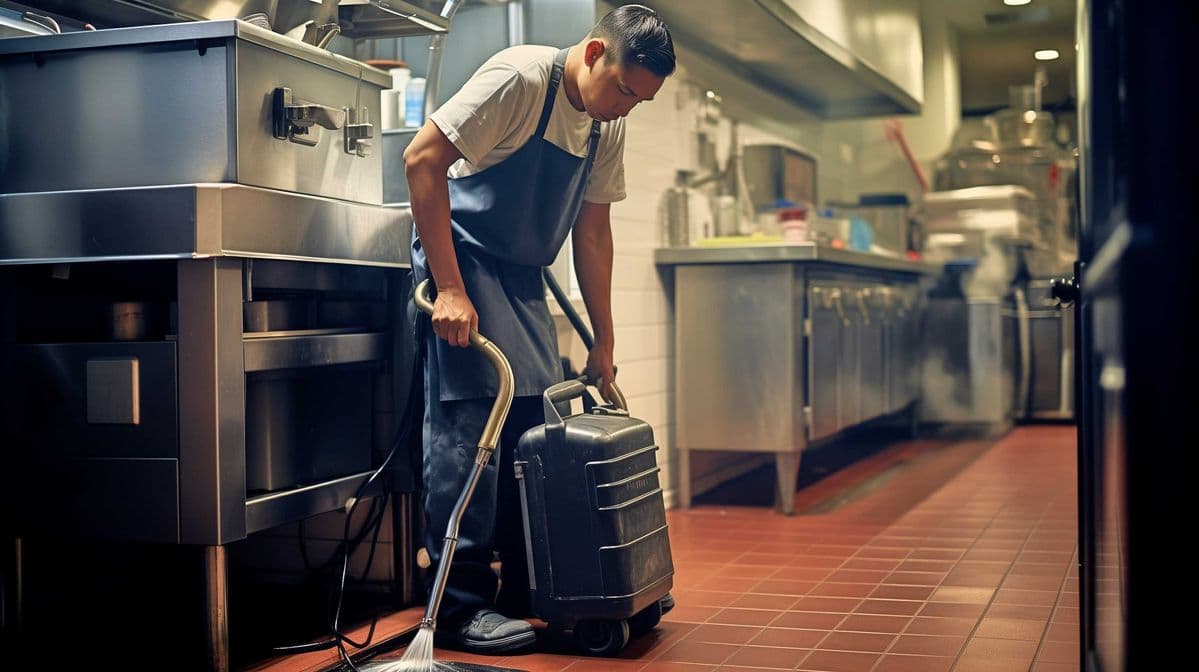
Septic Squad providing commercial grease trap cleaning at a Kyle, Texas property
Hays County

Grease Trap Cleaningin Kyle, Texas

Grease trap service for Kyle's kitchens — including the new operators along the I-35 corridor setting up a schedule for the first time.

Grease Trap Cleaning in Kyle

What to expect before you book.

County
Hays
Typical visit
30–60 min
Scheduling
Off-hours
Good for
New openings
Call (512) 729-5861
Same-day windowsacross Hays County
Licensed & insuredTexas OSSF compliant disposal
5.0 from 249 reviewsLocally owned, 10 years
Local knowledge

Commercial Grease Trap Cleaning in Kyle, Texas

Kyle has been opening restaurants faster than almost anywhere in the region, and that shapes the grease trap work here more than geology does. A large share of the kitchens along the I-35 corridor and through the newer retail are recent — which means a meaningful number of operators are running a trap for the first time, or have inherited a fit-out with a schedule nobody explained to them. That is a specific and fixable problem, and it is worth addressing at opening rather than at the first blocked drain.

What usually happens is this. A trap is specified and installed as part of the build, sized against the plans. Then the kitchen opens, the menu settles into something different from what was drawn, volume lands wherever it lands, and nobody revisits the interval because there was never an interval — just an installation. The trap fills at whatever rate the real business produces, and since it gives no external sign of being full, the first feedback anyone gets is a slow floor drain during service. A new operator has no baseline to notice the drift against, which is exactly why the first year is when this goes wrong.

The mechanism is straightforward. A trap slows the flow so fats, oils and grease rise and food solids sink, letting relatively clean water continue to the sewer. Once accumulation reaches roughly a quarter of the unit's capacity, retention time drops far enough that separation effectively stops — the 25% rule — and grease starts passing through to harden in your lateral and beyond. Because that threshold arrives long before a trap looks full, waiting for a visual cue is the wrong approach entirely.

Franchise and chain operations along the corridor generally arrive with a corporate service standard attached, which is useful as far as it goes. It is worth checking that the standard matches the unit you actually have rather than the one the brand specifies, because fit-outs vary.

Why Kyle calls Septic Squad

For a new kitchen the most valuable thing we do is set the first real interval — based on your unit, your menu and your covers rather than on the number in the build documents. We come back, see what the accumulation actually looks like against that estimate, and adjust it. Each visit is a full evacuation rather than a skim of the top layer, with the walls and baffles taken back, the flow control and inlet baffle confirmed, and everything disposed of at approved Texas facilities with paperwork you can file. We work before opening or after close so it never touches service.

The essentials

Grease Trap Cleaning in Kyle: what to know

New kitchens

Installed is not the same as scheduled

A trap specified during a build is sized against plans, not against the business that eventually opens. Plenty of Kyle operators have a perfectly good unit and no interval at all, because nobody handed one over with the keys. If you have opened in the last couple of years, or taken on someone else's fit-out, establishing a genuine interval early is the cheapest thing on this page — it is a conversation rather than a repair.

Menu drift

What you cook now, not what was drawn

Menus change after opening and volumes rarely match projections. A fryer-heavy menu on a small interior unit fills it in weeks; a limited hot offering on the same trap can stretch for months. Because the trap gives no external signal, nothing tells you the interval has drifted until a drain backs up mid-service. We set the schedule on what the kitchen is actually producing and revise it when the menu moves.

Chains and franchises

Corporate standard versus your actual unit

Franchise operations along the corridor usually come with a mandated service frequency, which is a reasonable starting point. It is still worth confirming that it matches the trap that was actually installed at your location — fit-outs differ between sites, and a standard written for a larger interceptor is not a safe schedule for a smaller interior unit. We will tell you if the two do not line up.

What you get

What a Kyle visit covers

Complete evacuation of the unit

Top layer and settled solids together. Removing only the floating grease is what makes each interval shorter than the last.

Walls and baffles taken back

Hardened build-up left in place eats working capacity from the first day after a service.

Flow control and inlet baffle confirmed

Both are ordinary failure points, and a damaged baffle stops separation working long before the unit looks full.

A first interval, then a corrected one

Estimated from your menu and covers, then adjusted once we have seen what actually accumulates. New kitchens need the second visit as much as the first.

Service outside opening hours

Before open, after close, or in the afternoon lull. Most visits run 30 to 60 minutes.

Records for every service

Work and disposal documented at approved Texas facilities, which is what an inspector will ask you to produce.

Questions

Grease Trap Cleaning in Kyle: common questions

We just opened in Kyle. How do we set a grease trap schedule?

Start from your unit size and your actual menu rather than the build documents, then correct it after the first service. We will give you an estimated interval up front, and when we come back we can see how much has genuinely accumulated against that estimate and set a real schedule from evidence. New kitchens almost always need that second data point, because opening projections and real trading rarely match.

How often does a Kyle restaurant need its trap cleaned?

Most land between monthly and quarterly, but it is driven by your trap size and your volume rather than by being in Kyle. The trigger is the 25% rule — service before grease and settled solids reach a quarter of capacity — and a fryer-heavy kitchen on a small interior unit reaches that far faster than a limited hot-food operation on a larger one.

Our franchise sets a required service frequency. Is that enough?

It is a sound starting point and usually close. The thing worth checking is that it was written for the unit your location actually has, since fit-outs vary between sites and a frequency set against a larger interceptor is not safe for a smaller interior trap. We will tell you if what is installed and what is mandated do not match.

What goes wrong if we leave it?

Separation stops and grease passes into the line beyond the trap, where it cools and hardens. First you get slow kitchen drains, then odour reaching the dining room, then a blockage — and a blockage traced back to your premises is your cost to clear, whether it is in your lateral or further downstream. The maintenance schedule is materially cheaper than any one of those.

Can you service us without closing the kitchen?

Yes, that is the normal way we do it. Most cleanings take 30 to 60 minutes and fit comfortably before opening, after close, or in a mid-afternoon gap. We would rather hold a standing slot at the right interval than take an emergency call during a Friday dinner service.

Do you cover food trucks and smaller operations?

Yes — food trucks, cafés, bars, schools, care homes and kitchens of any size across Kyle and Hays County. Small units are quick jobs and we would rather build them into a route than turn them away as too small to be worth the visit.

Nearby

Other areas we serve

Communities close to Kyle, each with its own local guide.

Call Now💬 Get an Estimate
Book Online