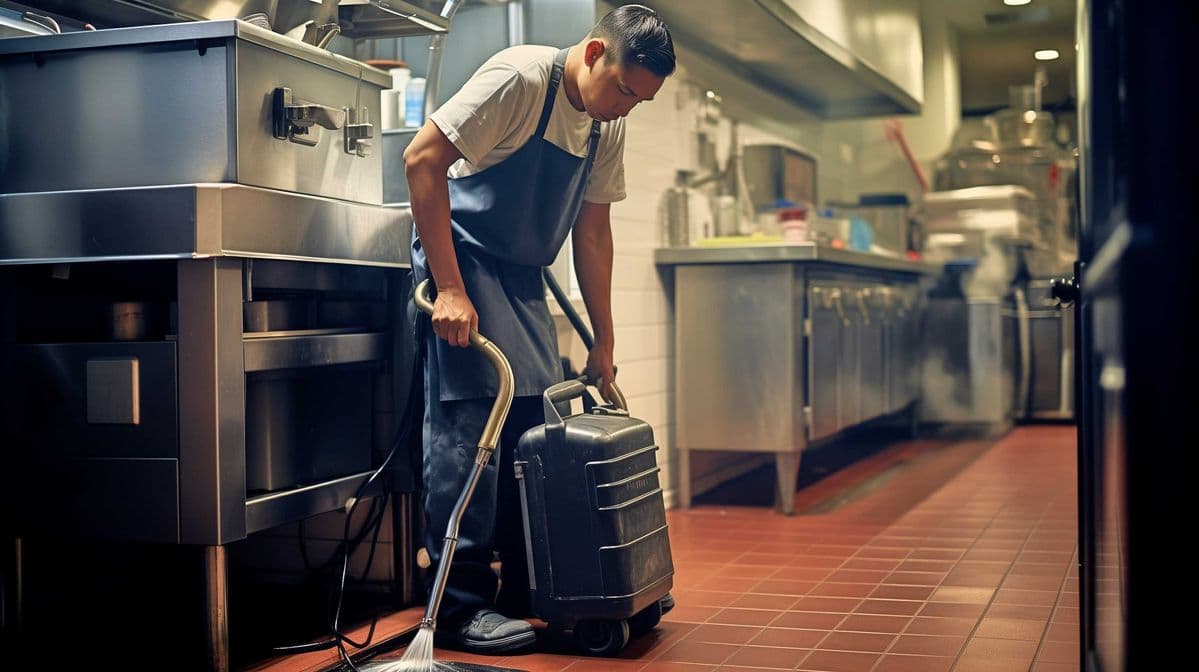
Septic Squad providing commercial grease trap cleaning at a Dripping Springs, Texas property
Hays County

Grease Trap Cleaningin Dripping Springs, Texas

Scheduled and emergency grease trap service for Dripping Springs kitchens, venues and taprooms — timed around your event calendar, not through it.

Grease Trap Cleaning in Dripping Springs

What to expect before you book.

County
Hays
Discharges to
On-site system
Scheduling
Between events
Records
Every service
Call (512) 729-5861
Same-day windowsacross Hays County
Licensed & insuredTexas OSSF compliant disposal
5.0 from 249 reviewsLocally owned, 10 years
Local knowledge

Commercial Grease Trap Cleaning in Dripping Springs, Texas

Grease trap service in Dripping Springs protects something quite different from what it protects in a sewered town, and the difference is the whole point. A kitchen in central Austin sends its wastewater into a public main, so a neglected trap is ultimately a compliance problem and someone else's blockage. Dripping Springs has essentially no municipal sewer across most of the area, which means your kitchen discharges to an on-site treatment system on your own property — almost always an aerobic unit. Grease that gets past the trap does not travel off-site to become a city problem. It reaches a treatment system that works by keeping a biological process alive, and grease is precisely what smothers it.

That changes the economics. A failed trap in a sewered town produces a blocked lateral and a bill. A failed trap here can take out the aerobic system the entire property depends on — a replacement running well into five figures, in an area where a site evaluation over recharge or contributing zones restricts what you are permitted to install in its place. The trap is not the asset being protected. It is the cheap component protecting the expensive one.

The other local factor is the shape of the demand. Dripping Springs draws its commercial load from hospitality: wedding venues, breweries, distilleries, taprooms and restaurants across the US 290 and Ranch Road 12 corridors. That business is not steady daily covers — it is concentrated into weekends and event dates, so a trap can sit quiet through a midweek and take a season's worth of load in two evenings. Interval here is better set against the booking calendar than against a fixed monthly rule. The working benchmark is still the 25% rule — clean before accumulated grease and settled solids reach a quarter of the trap's capacity, because past that the retention time drops and separation effectively stops — but what that means in weeks depends entirely on when you are actually busy.

Why Dripping Springs calls Septic Squad

We do the septic and the grease side for properties out here, which on a venue is genuinely useful: the trap and the treatment system are one problem, and knowing what the aerobic unit has been coping with tells you whether the trap interval is right. We empty the unit completely rather than skimming the floating layer, scrape the walls and baffles, check the flow control and inlet baffle, and dispose of everything through approved Texas facilities with documentation for every visit. And we schedule around your calendar — between bookings, before open or after close. Given the aquifer sensitivity here, proper handling and disposal is worth confirming of any provider you use, not just us.

The essentials

Grease Trap Cleaning in Dripping Springs: what to know

What it protects

Your trap is guarding your treatment system

With no sewer to discharge into, grease passing the trap reaches an aerobic treatment unit and smothers the biological process it runs on. That is a different order of consequence from a blocked lateral: the system stops treating, and replacing it in an aquifer-sensitive area means a fresh site evaluation with restricted options. Trap maintenance here is not housekeeping, it is protection for the most expensive component on the property.

Event load

Booked weekends, quiet midweeks

Hospitality drives the commercial load around Dripping Springs — venues, breweries, distilleries and restaurants along the US 290 and Ranch Road 12 corridors — and that load is concentrated rather than steady. A trap can sit almost unused midweek and take an enormous hit across two event evenings. Setting an interval from a fixed monthly rule either wastes visits or misses the load entirely. We set it against your actual calendar and adjust it through the season.

Trap sizing

Interior traps and event-scale interceptors

Smaller kitchens and taprooms typically run interior traps under or near the three-compartment sink. Purpose-built venue and restaurant space is far more likely to have an in-ground interceptor outside sized for peak event flow. Interceptors hold much more and go longer between cleanings, but each cleaning is a bigger job and needs truck access planned for. Either way the right interval comes from the unit you have and the calendar you run, not a rule of thumb.

What you get

What a Dripping Springs visit covers

A complete pump-out

The whole unit emptied, not the floating layer skimmed. Settled solids left behind are what shorten the next interval.

Walls and baffles scraped

Hardened grease on the walls cuts working capacity from the first day after a cleaning.

Flow control and baffle check

A trap with a damaged inlet baffle stops separating properly long before it looks full — and here that failure reaches your treatment system.

Scheduling around bookings

Between events, before open or after close. We would rather work around your calendar than through a Saturday.

Documentation every visit

Proof of service and approved disposal, kept on file — which in an aquifer-sensitive area is worth having whether or not anyone has asked.

The septic side too

We service the aerobic system as well as the trap, so one provider sees both halves of what is really a single problem.

Questions

Grease Trap Cleaning in Dripping Springs: common questions

How often should a Dripping Springs restaurant or venue clean its grease trap?

It depends on your trap size and your booking calendar rather than on a fixed monthly rule, and out here the calendar is the bigger variable. A venue doing most of its covers across weekend events loads a trap in bursts, so an interval set from steady daily volume will be wrong in both directions. The benchmark is the 25% rule — clean before grease and solids reach a quarter of capacity. We will look at your unit and your season and give you a real interval.

Why does a full grease trap matter more in Dripping Springs?

Because there is generally no sewer to discharge into. Your kitchen wastewater goes to an on-site aerobic treatment system on your own property, and grease that gets past the trap smothers the biological process that system depends on. In a sewered town a neglected trap blocks a lateral. Here it can take out a treatment system that costs five figures to replace, in an area where what you are permitted to install in its place is restricted.

Can you service us between events rather than during the week?

Yes — that is the normal arrangement for venues out here. Most cleanings take 30 to 60 minutes, and we will schedule them between bookings, before open or after close. If your busy season has a predictable shape, we would rather build the schedule around it than have you call us on an event day.

Do you handle breweries, distilleries and taprooms?

Yes, alongside restaurants, wedding venues, food trucks and commercial kitchens of any size across Dripping Springs and Hays County. Production operations have their own waste characteristics and their own peaks, so the interval is set on what your operation actually produces rather than what the category suggests.

What is the difference between a grease trap and an interceptor?

Broadly size and placement. Traps are smaller units installed indoors near the sinks they serve. Interceptors are large in-ground tanks outside the building handling the whole kitchen's flow, and venue systems sized around peak event capacity are usually interceptors. Interceptors hold far more and are cleaned less often, but a cleaning is a bigger job and needs truck access thought about in advance. We service both.

Do you also service the septic system at the same property?

Yes, and on a Dripping Springs venue that is the sensible way to do it. The trap and the aerobic treatment system are two halves of one problem — what the trap lets through is what the treatment system has to cope with. Seeing both means the interval on the trap can be set from evidence rather than guesswork.

Nearby

Other areas we serve

Communities close to Dripping Springs, each with its own local guide.

Call Now💬 Get an Estimate
Book Online