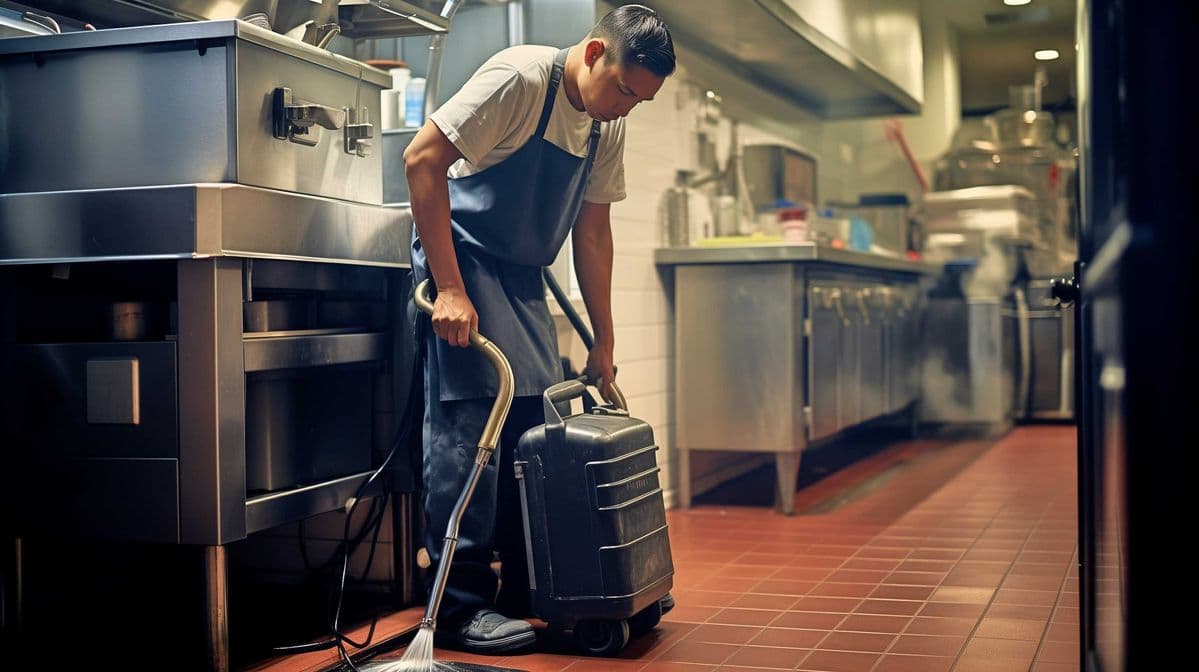
Septic Squad providing commercial grease trap cleaning at a Driftwood, Texas property
Hays County

Grease Trap Cleaningin Driftwood, Texas

Grease trap service for Driftwood's venues, tasting rooms and kitchens — scheduled around events, and mindful of what else your production sends downstream.

Grease Trap Cleaning in Driftwood

What to expect before you book.

County
Hays
Typical visit
30–60 min
Scheduling
Between events
Protects
Your treatment unit
Call (512) 729-5861
Same-day windowsacross Hays County
Licensed & insuredTexas OSSF compliant disposal
5.0 from 249 reviewsLocally owned, 10 years
Local knowledge

Commercial Grease Trap Cleaning in Driftwood, Texas

Driftwood's commercial operations send things into their wastewater that an ordinary restaurant does not, and that is the part worth understanding before setting any schedule. Alongside kitchen grease, a winery, brewery or distillery produces rinse water, washdown and production residues — and those carry an organic load that an aerobic treatment unit has to process on top of everything else arriving from the kitchen and the restrooms. A trap handles fats, oils and grease. It does not handle production waste, and it is worth being clear with yourself about which streams on your site go where, because an aerobic system that is quietly being asked to treat both is working much harder than its design assumed.

What makes that consequential here rather than merely inefficient is that there is no sewer to absorb a mistake. Every premises in Driftwood runs on its own treatment system, and grease that escapes a trap reaches a unit that works by keeping a biological process alive — which grease smothers. Replacing a failed treatment system in this area is not a straightforward purchase either: thin soil over limestone and aquifer-sensitive siting mean a site evaluation may support only a narrow set of options. The trap is a cheap component standing in front of an expensive and constrained one.

The cleaning trigger is the ordinary one. Once accumulated grease and settled solids reach roughly a quarter of the unit's capacity, retention time drops far enough that separation effectively stops, well before the trap looks full. What varies is how fast you get there, and on an event-driven site the answer is not a steady rate — a venue kitchen can sit almost idle for a week and then do a season's worth of covers across two evenings. An interval built on an average will be wrong at both ends. Build it on the calendar instead.

Why Driftwood calls Septic Squad

We service the trap and the treatment system both, which on a Driftwood site is not a convenience but the point — what the trap lets through lands in a system you cannot cheaply or easily replace. We schedule between events rather than through them, and we will ask what else your operation sends downstream, because a tasting room or a production space changes the picture in ways a kitchen-only assumption misses. Every visit is a full evacuation rather than a skim, with walls and baffles cleared, the flow control and inlet baffle confirmed, and disposal at approved Texas facilities documented.

The essentials

Grease Trap Cleaning in Driftwood: what to know

Production waste

A trap does not handle rinse and washdown

Wineries, breweries and distilleries generate rinse water, washdown and production residues with a substantial organic load, and none of that is what a grease trap is designed to intercept. It arrives at your treatment system regardless. Knowing which streams on your site go where — and whether your system was sized with production flow in mind — is worth establishing, because an aerobic unit quietly treating both is working well beyond the assumption it was built on.

What it protects

No sewer to absorb a mistake

Every premises here runs its own treatment system, so escaped grease does not become somebody else's blockage — it reaches a unit that depends on a living biological process and smothers it. Replacement is constrained by thin soil and aquifer-sensitive siting, meaning a site evaluation may support only limited options. That combination makes trap maintenance genuinely protective rather than administrative.

Event load

Two evenings can outweigh three weeks

An event kitchen does not accumulate at a steady rate. It sits quiet and then produces heavily across a concentrated run, so an interval calculated from an average is wrong during the quiet weeks and dangerously wrong during the busy ones. Send us the shape of your season and we will service ahead of the runs rather than after them, adjusting as your calendar moves.

What you get

What a Driftwood visit covers

The unit emptied in full

Floating grease and the solids settled underneath, since leaving the bottom layer is what shortens every following interval.

Walls and baffles cleared down

Hardened deposits cut usable capacity from the day after a service, which on an event site compounds quickly.

Flow control and inlet baffle

Confirmed sound — a damaged baffle stops separation working while the unit still appears to have room.

A conversation about your other streams

What production, rinse and washdown send downstream, and whether your treatment system was sized for it.

Scheduling against your calendar

Ahead of event runs rather than after them, revised as the season changes rather than fixed once.

The treatment system too

One provider seeing both halves, which matters where the system downstream is expensive and awkward to replace.

Questions

Grease Trap Cleaning in Driftwood: common questions

We run a tasting room as well as a kitchen. Does that change anything?

Yes, and it is worth raising rather than assuming. Rinse water, washdown and production residues carry an organic load that a grease trap is not designed to intercept, and it arrives at your treatment system regardless of how well the trap is maintained. The useful exercise is establishing which streams on your site go where and whether the system was sized with production flow in mind — not just kitchen flow.

How often should a Driftwood venue clean its grease trap?

Against your event calendar rather than the month. A venue kitchen can sit almost idle for a fortnight and then do a great deal across two evenings, so an interval from an average is wrong in both directions. The trigger is the 25% rule — service before grease and solids reach a quarter of capacity — and we will translate that into dates that sit ahead of your busy runs.

What happens if grease reaches our treatment system?

It smothers the biological process the system depends on, and with no sewer here that damage stays on your property. Replacing a failed treatment unit in this area is constrained: thin soil over limestone and aquifer-sensitive siting mean a site evaluation may support only limited options. The trap costs a fraction of that and is the only thing standing in front of it.

Can you work between events rather than during them?

That is the normal arrangement here and the one we would push for. Most cleanings take 30 to 60 minutes and fit comfortably between bookings, before opening or after close. We would much rather hold a planned slot ahead of your season than take a call during a Saturday.

Do you also pump the septic system at the same property?

Yes, and on a Driftwood site that is the sensible arrangement. The trap and the treatment system are a single chain — what gets past the trap is what the system has to cope with. One provider seeing both means the trap interval gets set against what is actually reaching the system rather than against a guess.

Do you handle smaller kitchens and food trucks?

Yes — kitchens of any size across Driftwood and Hays County, including food trucks operating at venues. Small units are quick work, and given how spread out this area is we would rather fold them into an existing route than treat them as too small to attend.

Nearby

Other areas we serve

Communities close to Driftwood, each with its own local guide.

Call Now💬 Get an Estimate
Book Online