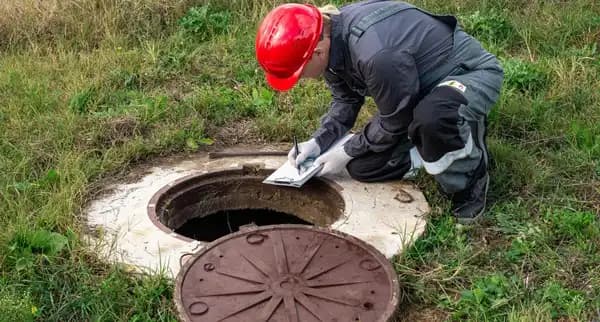
Septic Squad providing septic system inspections at a Driftwood, Texas property
Hays County

Septic Inspectionsin Driftwood, Texas

Inspections across Driftwood's rural acreage and its venues — where a residential system and an event system are genuinely different assessments.

Septic Inspections in Driftwood

What to expect before you book.

County
Hays
Typical system
Aerobic
Report
Same day
Also covers
Venue systems
Call (512) 729-5861
Same-day windowsacross Hays County
Licensed & insuredTexas OSSF compliant disposal
5.0 from 249 reviewsLocally owned, 10 years
Local knowledge

Septic System Inspections in Driftwood, Texas

Driftwood splits into two inspection jobs that share almost nothing beyond the county line. On one side are the residential systems: aerobic treatment units on large rural parcels, spread across rolling country well beyond any sewer network, every property dependent on what is in its own ground. On the other are the commercial operations — the wineries, distilleries, tasting rooms, wedding venues and restaurants that have made the area a destination — running systems sized for peak event flow rather than for steady daily use. Assessing one the way you would assess the other produces a useless answer.

For the commercial side the question that matters most is rarely condition. It is capacity against reality. A venue system is permitted for a specific design flow, and that number was set when the operation was a particular size. If the business has grown — more events, larger guest counts, a tasting room added, a kitchen expanded — the system may now be handling loads it was never permitted or built for. Expanding an operation without addressing the wastewater side is the single most common and most expensive oversight we see out here, and it surfaces at the worst imaginable moment: mid-event, in front of paying guests. Anyone buying a venue, or planning to scale one, should establish the permitted design flow from Hays County Development Services and compare it honestly against the Saturdays they intend to host.

For the residential side it is the usual aerobic question — whether the aerator is genuinely moving air, whether the chlorinator is dosing, whether the spray field disperses evenly — with an added local weight. Much of the surrounding landscape sits over aquifer-sensitive ground, and siting requirements here are among the more demanding in the region. Site evaluations frequently support only aerobic treatment with surface dispersal, which means if a system does need replacing, your options are narrower than they would be almost anywhere else we work. That makes catching a problem early worth more here than the same finding elsewhere.

Why Driftwood calls Septic Squad

We service both halves of Driftwood's wastewater, so we arrive knowing which inspection we are doing. On acreage that means the equipment and the dispersal field, checked properly rather than glanced at. On a venue it means reading the system against the event calendar it actually serves and against what it was permitted to handle — and saying plainly if those two numbers have drifted apart. We pump and inspect rather than sell replacements, which matters more than usual in a market where a replacement is both expensive and constrained by what a site evaluation will support.

The essentials

Septic Inspections in Driftwood: what to know

Venues

Permitted flow against actual Saturdays

A commercial system was permitted for a design flow set at a particular moment in the business's life. Events get bigger, tasting rooms get added, kitchens expand — and nobody revisits the wastewater permit. Hays County Development Services holds the figure. Comparing it against the guest counts you actually host is a short exercise that prevents the most expensive failure available to a venue, which is a system giving out during an event.

Siting

Narrow options if it ever needs replacing

Thin soil over limestone and aquifer-sensitive ground mean site evaluations here frequently support only aerobic treatment with surface dispersal. Conventional drainfields are largely unavailable for new work. The practical consequence for an owner is that a failed system is not simply a purchase — it is a constrained one, so an inspection that catches deterioration early is worth considerably more than the same finding in a market with easy alternatives.

On site

Long drives and rough ranch tracks

Driftwood is spread out and unpaved approaches across acreage are the norm rather than the exception. Tanks sit wherever the rock allowed, frequently a long way from anywhere a vehicle can reasonably stand. Extended hose runs cover most of it, and gates are routine. Describing the approach and the rough tank location when you book is what lets us arrive equipped rather than making a second trip.

What you get

What a Driftwood visit covers

Aerator, chlorinator and controls

Whether the air pump moves air, the chlorinator holds and doses, and the floats and panel behave as they should.

Spray field walked properly

Checked for even dispersal, pooling, dead heads and surfacing — which over aquifer-sensitive ground matters beyond the property.

Tank condition and sludge line

Structure and accessible components, with sludge measured against the outlet rather than estimated from the surface.

Permitted capacity for commercial sites

The design flow the system was approved for, set against the event loads the operation now actually hosts.

What replacement would involve

Given aquifer-sensitive siting, the realistic options if a system is approaching the end of its life.

An honest limitation

We do not perform LCRA inspections or assess electronic components and mechanical pump systems. Say so at booking if that is your requirement.

Questions

Septic Inspections in Driftwood: common questions

We run a venue in Driftwood. What should an inspection cover?

The condition of the system, and separately whether its permitted design flow still matches the events you host. Those are different questions and the second one is where venues get caught. A system approved when you were doing smaller events may be well past its permitted capacity now, and the failure that follows lands mid-event rather than on a quiet Tuesday. Hays County Development Services holds the permitted figure.

We are planning to grow our event capacity. What should we check first?

The wastewater side, before you book the bigger dates. Expanding an operation without addressing what the system is permitted and built to handle is the most common expensive oversight in this area. Establish the design flow, work out what your intended guest counts actually put through the system, and address the gap deliberately rather than discovering it during a Saturday.

Why do Driftwood properties almost all run aerobic systems?

Thin soil over limestone leaves insufficient depth for a conventional drainfield across most of the area, and much of the surrounding landscape sits over aquifer-sensitive ground where siting requirements are demanding. Aerobic units treat effluent to a much higher standard before dispersing it at the surface, and that is what site evaluations here typically support.

Can you reach a property on a rough ranch track?

Generally, yes — long unpaved drives across acreage are the normal case here rather than an obstacle. We work from extended hose wherever the truck can stand safely. Telling us about the approach, any gates and roughly where the tank sits when you book means we turn up with the right length of hose instead of making a second visit.

How often should a Driftwood system be inspected?

For a residential aerobic system, the equipment needs checking far more often than the tank needs emptying, and a full inspection every one to three years on top of that is sensible. For a commercial system the interval should follow the event calendar rather than the year — a venue's system does most of its work on a limited number of days and should be assessed with that in mind.

Do you inspect the grease trap at the same visit?

We can service both, though they are separate items on separate cycles. A grease trap is not part of the septic system and does not follow a septic interval — but what the trap lets through arrives at the treatment system, so on a commercial property it makes sense for one provider to see both.

Nearby

Other areas we serve

Communities close to Driftwood, each with its own local guide.

Call Now💬 Get an Estimate
Book Online