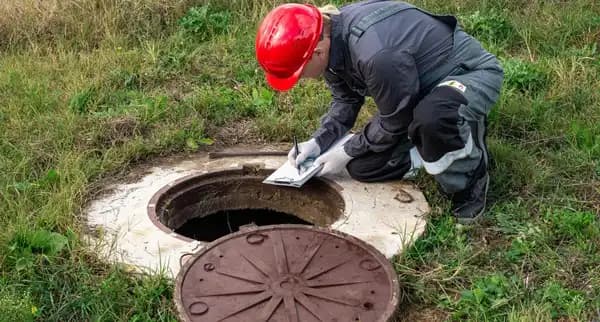
Septic Squad providing septic system inspections at a Buda, Texas property
Hays County

Septic Inspectionsin Buda, Texas

Inspections for Buda acreage and rural tracts — where the real question is usually whether a system built for one household still suits the one living there.

Septic Inspections in Buda

What to expect before you book.

County
Hays
System split
East / west
Report
Same day
Key risk
Capacity
Call (512) 729-5861
Same-day windowsacross Hays County
Licensed & insuredTexas OSSF compliant disposal
5.0 from 249 reviewsLocally owned, 10 years
Local knowledge

Septic System Inspections in Buda, Texas

The useful question on most Buda properties is not whether the system is broken. It is whether a system built for one household is still fit for a different one. A great many of the tracts that remain on septic here are genuinely rural — larger parcels, some with livestock, frequently carrying the original installation from when the place was a working farm. Those systems are often perfectly well built and have simply been left alone. What has changed is what is being asked of them. A tank sized for a farm household in an era of much lower water use can be genuinely marginal for a modern family with two or three bathrooms, a dishwasher and a washing machine running most days. Nothing is faulty. The load has moved.

The symptom is a tank that fills faster than the owner expects, and the mistake is reading that as a defect. It is a capacity mismatch, and the remedy is understanding it rather than ignoring it: either a shorter service cycle that keeps solids from carrying over, or eventually a capacity upgrade. What makes it worth catching at inspection is that the failure it leads to is not the tank's. It is the drainfield's, and a drainfield is the part you cannot repair.

The second thing to establish is which Buda you are in. The city sits on a transition, and the line runs roughly with the interstate. East, toward I-35, the soils are deeper and conventional drainfields work as designed. Move west and the ground grows shallower and rockier, the Onion Creek drainage becomes a factor, and the balance shifts toward aerobic treatment with surface dispersal. Those are two different inspections: on the eastern side the field is the expensive unknown, and on the western side it is the treatment equipment. Permitting runs through Hays County Development Services under TCEQ Chapter 285 either way, and on legacy rural properties the original permit record is frequently thin — normal for the age, but far better resolved before a sale than during one.

Why Buda calls Septic Squad

We assess capacity against actual usage rather than reporting a sludge depth and leaving you to interpret it. That means asking how many people live there, what the water use looks like, and whether the interval you have been running is keeping up — then telling you plainly whether a shorter cycle will hold it or whether you are heading toward a larger conversation. On a tank that may not have been opened in years we check condition properly rather than assuming it is fine because nothing has gone wrong yet.

The essentials

Septic Inspections in Buda: what to know

Capacity

Sized for a farm, serving a family

The recurring finding on Buda's older conventional systems is a mismatch between design capacity and present load. A tank built for a farm household in a period of lower water use is working much harder for a modern family, and the visible symptom is simply that it fills sooner than expected. That is not a fault in the tank. It does, though, raise the risk of solids carrying over to the drainfield, which is where the expensive failure actually happens.

East or west

The transition runs near the interstate

Buda straddles a change in the ground. Eastern tracts on deeper soil predominantly run conventional tanks with gravity drainfields, many original to the property. Western and rockier parcels lean toward aerobic units with spray dispersal, as thin soil over rock limits what a conventional field can do, and siting requirements grow more demanding heading west into the Onion Creek drainage. Which side you are on determines what the inspection is really examining.

On site

Long drives, gates and livestock

Buda's rural tracts bring long approaches, stock gates and tanks that were never marked or fitted with risers. All routine, all easier with notice. Where a property carries livestock we need gates managed and animals secured before a truck moves onto the land. Tanks are located with a flushable probe rather than exploratory digging, and ground in the Onion Creek drainage stays soft well after rain, which affects where a loaded vehicle can safely go.

What you get

What a Buda visit covers

Capacity read against real usage

How many people the system actually serves and how the household uses water, set against what the tank was built for.

Condition of a long-unopened tank

Walls, lid, inlet and outlet on a system that on many Buda properties has not been accessed for years.

Whether solids have been carrying over

Sludge and scum measured against the outlet — the evidence that decides whether the drainfield is at risk.

The right assessment for your side of town

Drainfield condition on an eastern conventional system; aerator, chlorinator and spray zone on a western aerobic one.

A straight answer on what comes next

Whether a shorter pumping cycle holds the situation or whether you are genuinely heading toward a capacity upgrade.

An honest limitation

We do not perform LCRA inspections or assess electronic components and mechanical pump systems. Say so at booking if that is what you need.

Questions

Septic Inspections in Buda: common questions

My Buda tank fills faster than it should. Is it broken?

Usually not. The far more common explanation here is that the system was sized for a farm household with much lower water use than a modern family produces, so it is doing more work than it was designed for. That is a capacity mismatch rather than a fault. The practical answer is a shorter service cycle, and the reason it matters is that an overloaded tank is where solids start escaping toward the drainfield.

How do I know whether I have a conventional or an aerobic system?

Broadly it follows which side of town you are on. Eastern tracts on deeper soil tend to run conventional tanks with a gravity drainfield; western and rockier parcels tend toward aerobic units with spray dispersal. If you have spray heads that run on a timer, it is aerobic. If effluent leaves the tank and disappears into a gravel bed, it is conventional. We can confirm it on the first visit either way.

The system is original to the farm. Should I replace it?

Not on age alone. Plenty of these were well built and have simply been left alone rather than neglected, and many are structurally fine. What they have rarely had is an assessment against modern household demand. Establish the condition and the capacity against how you actually live in the property, and make the decision from that rather than from the installation date.

We have livestock. Does that complicate a visit?

Only logistically, and it is routine for us on rural Hays County tracts. We need gates managed and animals secured before a loaded truck moves across the property, for their safety as much as for access. Mention it when you book and we will plan the approach around it.

There are no permit records for our system. Does that matter?

It is common on legacy rural properties and usually resolvable, but it is much better handled early. Hays County Development Services holds whatever exists for the address, and a buyer's inspector asking for documentation that was never filed is an awkward moment to discover the gap. If a sale is anywhere on the horizon, find out what is on file now.

Do siting rules differ across Buda?

They tighten as you move west. Parts of western Hays County sit in areas where aquifer protection shapes what a site evaluation will support, and requirements grow more demanding heading into the Onion Creek drainage. It rarely affects a routine inspection, but it matters a great deal if a replacement system is ever on the table, because it constrains what you would be permitted to install.

Nearby

Other areas we serve

Communities close to Buda, each with its own local guide.

Call Now💬 Get an Estimate
Book Online