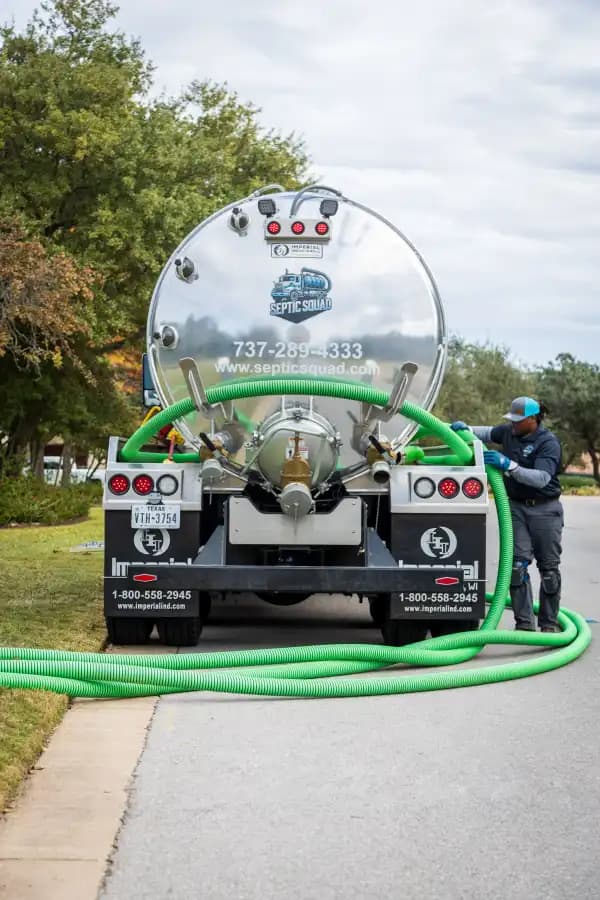
Septic Squad providing emergency septic pumping at a Buda, Texas property
Hays County

Emergency Septic Pumpingin Buda, Texas

Backups and overloaded systems across Buda and its rural tracts — answered by a person at any hour, with an approach planned around your land.

Emergency Pumping in Buda

What to expect before you book.

Availability
24/7, 365
Answered by
A real person
Response
Same day
County
Hays
Call (512) 729-5861
Same-day windowsacross Hays County
Licensed & insuredTexas OSSF compliant disposal
5.0 from 249 reviewsLocally owned, 10 years
Local knowledge

Emergency Septic Pumping in Buda, Texas

A Buda emergency is usually the moment a long-running capacity problem becomes visible. The pattern is consistent: a farm-era tank that has been quietly working beyond its design load for years, an owner who has noticed it fills sooner than expected but has treated that as a quirk rather than a warning, and then a week where the household is fuller than usual or the ground is wetter than usual, and there is simply nowhere left for anything to go. The tank was never faulty. It was always slightly too small for the life being lived above it, and the margin finally ran out.

Which side of town you are on shapes what happens next. On the eastern tracts, where conventional tanks and gravity drainfields are the norm, an overloaded system pushes solids toward the field, and a field that has been receiving them for years eventually stops accepting flow — after which pumping relieves the house but resolves nothing underneath. On the western parcels running aerobic treatment, the failure is more often equipment: a dead air pump, a chlorinator that emptied months ago, a stuck float. Those produce an alarm rather than a backup, and they do not fix themselves.

The practical complication here is the land itself. Buda's rural tracts mean long drives, stock gates and tanks that were never marked, and ground in the Onion Creek drainage stays soft for a long time after rain. A loaded vacuum truck in the wrong place does damage that outlasts the septic problem by years. Where livestock are on the property, gates need managing and animals need securing before we move, which is a two-minute conversation on the phone and a significant delay if it happens on arrival instead.

While you wait: stop water use across the household, keep people and animals clear of anything that has surfaced, and if you know where the tank is, be ready to point at it.

Why Buda calls Septic Squad

We answer at any hour and we come out the same day, but the more useful thing we bring to a Buda call is the right question. If your tank has been filling early for years, the emergency is the symptom of something structural, and you need to hear that rather than have it pumped and left. We check sludge and baffle condition while the tank is open, tell you whether the field has been taking solids, and give you a straight view of whether a shorter interval will hold it. And we plan the truck route around soft ground and stock rather than driving the shortest line.

The essentials

Emergency Pumping in Buda: what to know

The pattern

A margin that finally ran out

Most Buda call-outs trace back to a system carrying more than it was designed for, over a long period, until a wet spell or a full house removes the last of the headroom. The tell is an owner who already knew the tank filled sooner than it should. That is not a quirk — it is the warning, and an emergency is what it turns into. Recognising it early converts a call-out into a scheduling decision.

East or west

Two different failures

Eastern tracts on conventional systems fail at the drainfield: solids reach the soil, the field stops accepting flow, and the house backs up. Western parcels on aerobic units fail at the equipment: a dead aerator, an empty chlorinator, a float that has stopped moving, usually announced by an alarm rather than a backup. Knowing which you have tells us what to bring and tells you what the likely answer is before we arrive.

Your land

Gates, stock and soft ground

Long drives and livestock gates are normal here, and ground in the Onion Creek drainage holds water well after rain. A full truck on soft pasture leaves ruts that last far longer than the problem that brought us out. Animals need securing and gates managing before we move onto the land. Tell us about both on the call and the visit runs properly; leave it to the arrival and it does not.

What you get

What a Buda visit covers

Answered around the clock

Nights, weekends and holidays are ordinary working hours here, not an exception with a queue attached.

Same-day attendance

Buda is a straightforward run south of Austin. We give you a real window on the call rather than a vague assurance.

Full removal, not a skim

On a system that has been running past its capacity, taking off the liquid alone means calling us again within days.

The capacity question answered

Whether what you have is an overloaded system needing a shorter cycle, or a drainfield that has already stopped coping.

A route planned around the property

Soft ground avoided, extended hose where it helps, gates and stock handled before anything moves.

Approved disposal, documented

Everything removed goes to approved Texas facilities, with a record of the visit.

Questions

Emergency Pumping in Buda: common questions

Our tank has always filled quickly. Now it has backed up. What happened?

Most likely the margin finally ran out. A tank that consistently fills sooner than expected is usually carrying more load than it was designed for — common on Buda properties where a farm-era system now serves a modern household. It works until something tips it: a fuller house, a wet stretch, a slightly longer gap between pump-outs. The emergency is the visible end of a long process rather than a sudden fault.

Will pumping fix it, or is there a bigger problem?

It depends on whether the drainfield has been taking solids. If the tank was simply overloaded and the field is sound, pumping resolves it and a shorter service interval keeps it resolved. If solids have been reaching the field for years, pumping empties the tank and the field stays compromised — and that is a replacement rather than a repair. We check sludge depth and outlet baffle condition while we are in there precisely so you get a real answer.

We have livestock on the property. What do you need from us?

Animals secured and gates managed before a loaded truck moves onto the land — for their safety and so we are not working around them. It is entirely routine on rural Hays County tracts, but it needs arranging before we arrive rather than at the gate. Mention it on the call and we will plan the approach with it in mind.

Can you get a truck across our land after rain?

Often, but it needs thought. Ground in the Onion Creek drainage stays soft long after the surface looks dry, and a full vacuum truck in the wrong place leaves damage that outlasts the septic problem considerably. We work from extended hose where that keeps weight off the softest ground, and where conditions are genuinely poor we will say so and propose an approach rather than pressing on.

My aerobic alarm is sounding rather than anything backing up.

That points to the western pattern — equipment rather than capacity. Usually it means a high water level, a failed air pump, or a pump or float that has stopped working, and none of those resolve on their own. Note which alarm is showing before silencing it and tell us on the call; it changes what we expect to find and what we bring.

Do you carry out repairs?

No, we pump. Where the answer is a drainfield replacement, a tank repair or a new aerator, we will empty the system, document what we found, and point you toward local contractors who handle that work properly. On Buda systems the answer is frequently structural rather than a pump-out, so the distinction is worth stating plainly.

Nearby

Other areas we serve

Communities close to Buda, each with its own local guide.

Call Now💬 Get an Estimate
Book Online