 SEPTIC
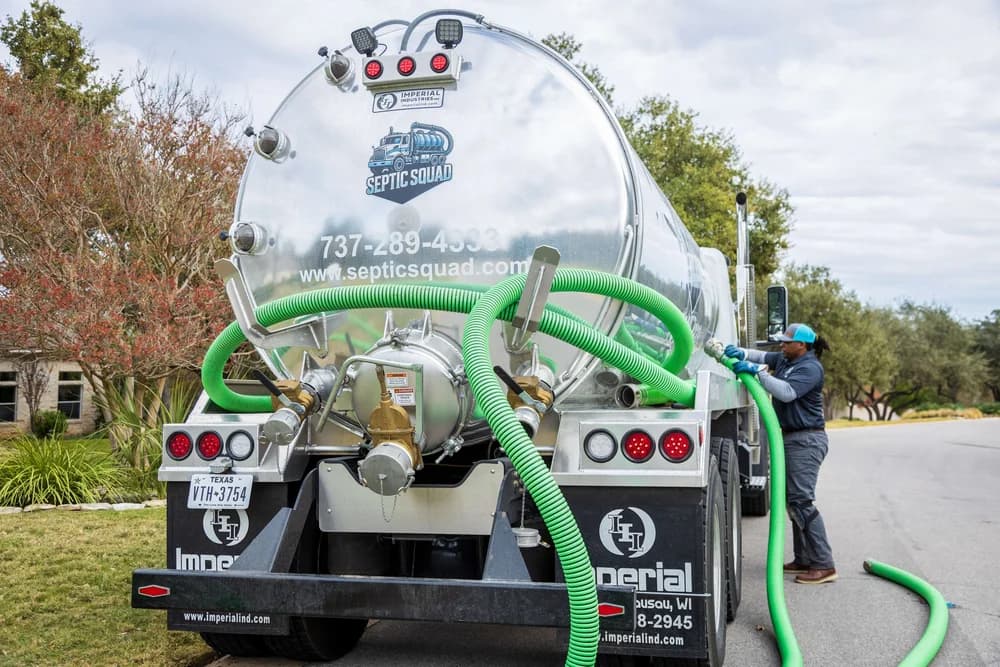
Lift Station Pumping in Round Rock, Texas
Round Rock is mostly a sewer city, and that is precisely why it has lift stations. Sewer service spread quickly as the city grew, but it did not spread evenly, and wherever development landed on ground that falls away from the nearest main — across Brushy Creek, down toward a tributary, on the far side of a ridge — a station was the way to connect it. The result is a scattering of stations behind retail centres and restaurants along I-35 and University Boulevard, at office and tech campuses, in subdivisions built where gravity could not quite reach, and at individual properties that tied into the sewer from below it.
The commercial stations carry most of the risk. Round Rock's food-service corridors are dense, and grease that escapes even a well-maintained trap accumulates in a downstream wet well over months. It floats into a mat, coats the floats so the pumps start late or run dry, and traps rags and debris against the intakes. Office and campus stations collect less grease but plenty of wipes and paper products that do not break down.
The city's position on the boundary between the Blackland Prairie and the Edwards Plateau matters too. East of the boundary, stations sit in clay that moves with the seasons; west of it, in shallow soil over rock. Both conditions are hard on the connections at a well's walls over time, which is one more reason to look inside periodically rather than only when it alarms.
Why Round Rock calls Septic Squad
Round Rock is on our regular Williamson County route, and commercial station work fits around how businesses actually operate — early mornings before a restaurant opens, or windows that keep a campus lot clear. We pump the well down fully, remove the grease mat and floor solids, and tell you straight what we saw of the floats and well. Owners weighing whether a property's station still makes sense after nearby sewer upgrades also get an honest description of its condition.