 SEPTIC
Lift Station Pumping in Georgetown, Texas
Georgetown's lift stations serve an unusual mix of properties. The city has a large retirement population, and the senior living campuses and care facilities that come with it run kitchens and laundries every day of the year. Add the schools, churches and university buildings, the subdivisions spreading east into former farmland, and commercial sites near the San Gabriel River and its forks, and you have stations carrying very different loads within a few miles of each other.
The campus stations are the ones that most reward a schedule. Their flow is high and remarkably steady — three meals a day, every day, for a consistent number of residents — which means grease and solids reach the wet well at a predictable rate. That makes the right interval easy to calculate and important to keep. A station that alarms at a care facility is not a minor inconvenience; it is a backed-up floor drain in a building where people live.
Other stations follow the familiar patterns. Church and school stations see heavy use on certain days and very little on others, so wastewater sits and turns septic between peaks. Subdivision stations on the east side often carry less than their design flow while neighbourhoods fill in. Western properties, on thin soil over limestone near recharge features, are where an overflow does the most harm.
Why Georgetown calls Septic Squad
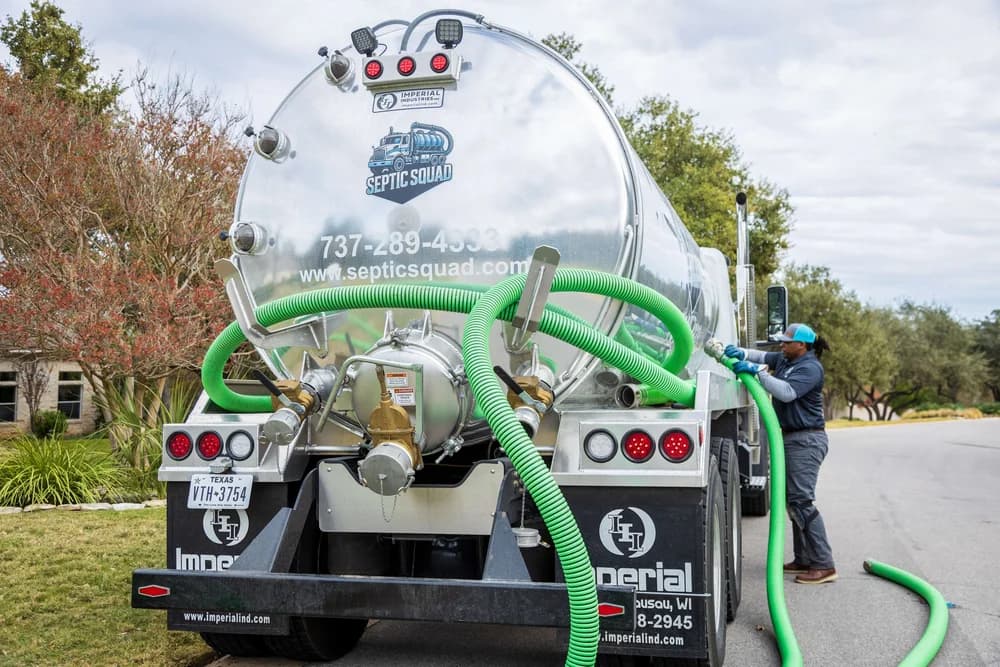
We work Georgetown regularly and understand that a care campus cannot simply shut off its water while we work. We plan clean-outs with facility managers for the lowest-flow window, empty the well completely — grease, debris and floor solids — and report what we saw of the floats and well in plain language. For steady-load campuses, we help set an interval that matches the facility's actual meal count rather than a guess.