 SEPTIC
Lift Station Pumping in West Lake Hills, Texas
West Lake Hills is built on hillsides, and a great many of its houses sit below the street they front. That single fact explains most of the lift stations here. When the lowest drain in a house is lower than the line it has to reach, wastewater cannot get there by gravity, so it collects in a small private wet well and pumps push it uphill. Many of these stations were installed decades ago, when the original house went in; others arrived with a remodel that added a lower level or moved bathrooms downhill.
Private stations are easy to forget. They sit quietly in a side yard or below a deck, the pump runs a few times a day, and nobody thinks about them until the alarm sounds. In the meantime the well collects what every wet well collects: grease from the kitchen that hardens into a crust, wipes and other material that never breaks down, and sludge on the floor. On a station serving one household the accumulation is slower than on a commercial well, but it does not stop, and on an older installation the floats and fittings have had a long time to wear.
The small commercial buildings along Bee Caves Road and Westlake Drive add a different kind of station, with restaurant or office tenants and grease loads to match. Either way, the cheapest moment to deal with a wet well is before it alarms.
Why West Lake Hills calls Septic Squad
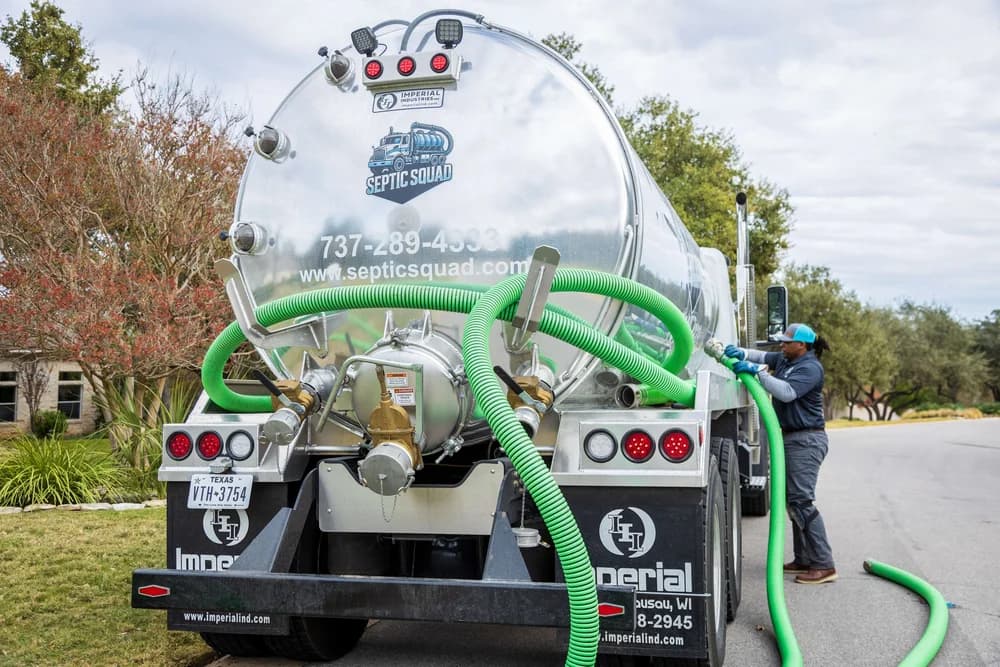
Narrow, winding streets and steep drives are normal working conditions for us in West Lake Hills. We plan where the truck can sit and how far the hose has to run before we arrive, rather than finding out on the street. Once we are there, we empty the well fully, clear the grease and sludge, and tell you honestly how the floats and well look — which, on a station that may be thirty years old, is worth knowing.