 SEPTIC
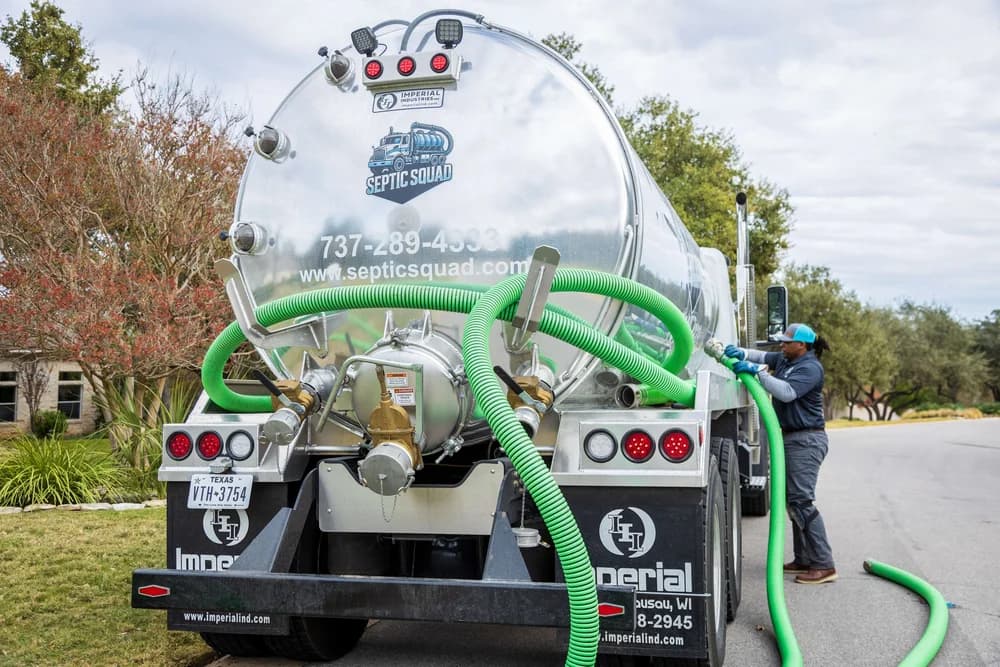
Lift Station Pumping in Bee Cave, Texas
In Bee Cave the reason for a lift station is usually the rock. A few inches of soil over solid Edwards limestone means every foot of gravity sewer has to be cut rather than dug, and the terrain falls away in every direction toward Lake Travis and the creeks that feed it. Rather than trench deep channels through limestone, developers lift wastewater over the high ground — so stations turn up behind the commercial centres along Highway 71 and RR 620, in hillside subdivisions, and at individual custom homes whose lowest floor sits well below the line it drains to.
The commercial stations carry the heaviest load. A retail centre with restaurants, a hotel kitchen or a busy café sends grease that passes the trap in small amounts every day, and in a wet well those amounts add up into a floating mat that coats floats and wraps debris into the pump intakes. Residential stations on the slopes have the opposite problem: modest, uneven flow, wastewater sitting for long stretches between cycles, and the odour that comes with it.
The consequence of letting a Bee Cave station run to failure is also higher than average. Wastewater that overflows on thin soil over fractured limestone does not soak in and stay put — it moves quickly toward creeks and the lake. That is a strong reason to pump wells on a schedule rather than wait for the high-level alarm.
Why Bee Cave calls Septic Squad
We work the western suburbs constantly, and Bee Cave stations come with their own access problems — steep driveways, tight turnarounds behind retail buildings, wells set into rock at the foot of a slope. We plan for that before the truck arrives rather than discovering it on the day. On the job we clear the whole well, grease and settled solids included, and tell you straight what we saw of the floats and well walls.