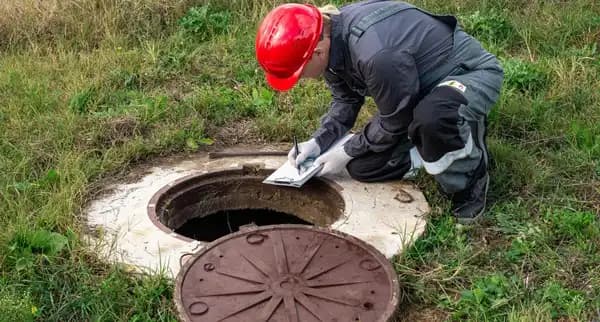
Septic Squad providing septic system inspections at a West Lake Hills, Texas property
Travis County

Septic Inspectionsin West Lake Hills, Texas

Careful inspections for West Lake Hills properties — older tanks, wooded slopes and systems that have been in the ground far longer than the neighbourhood average.

Septic Inspections in West Lake Hills

What to expect before you book.

County
Travis
Typical system
Older conventional
Report
Same day
Best for
Home sales
Call (512) 729-5861
Same-day windowsacross Travis County
Licensed & insuredTexas OSSF compliant disposal
5.0 from 249 reviewsLocally owned, 10 years
Local knowledge

Septic System Inspections in West Lake Hills, Texas

West Lake Hills is the oldest septic market in the western suburbs, and that single fact sets what an inspection here has to answer. The city developed well before Lakeway or the newer communities further out, so a meaningful share of its systems predate aerobic technology entirely — original concrete tanks from the 1960s and 70s, still in the ground and in many cases still working perfectly well. Age on its own is not a verdict. Plenty of those tanks are structurally sound after forty or fifty years and will go on being so. But they fail in ways newer systems simply do not, and those are the specific things worth looking for.

Baffles are the first. On tanks of that vintage the inlet and outlet baffles were sometimes cast in place rather than fitted as separate components, and concrete of that age can deteriorate at exactly the point where it matters most. A tank that looks fine from above can have lost the thing that stops solids leaving for the drainfield. The second is root intrusion, which is a live risk here in a way it is not on open ground east of Austin. Heavy oak and cedar canopy over decades finds its way into tank joints and drainfield lines, particularly where joints have loosened with age, and roots caught early are a far cheaper problem than roots left to establish. The third is simply where things are. Drainfields here were put wherever the grade and the rock allowed rather than where convention would place them, and after decades of landscaping changes the original footprint is often no longer obvious — sometimes it has been planted over, occasionally built over.

The paperwork problem here is the mirror image of the newer suburbs. Systems installed before current permitting practice may have thin records or none at all with Travis County, and that tends to surface when a buyer's inspector asks for documentation that was never filed. For systems of this vintage that is unremarkable and generally resolvable — but it is far easier to sort out with time in hand than inside a closing window. If you are thinking about selling, finding out what the county actually holds for your address is a sensible thing to do early.

Why West Lake Hills calls Septic Squad

Older systems on difficult ground reward a technician who slows down, and that is the approach we take here. We check baffle integrity and tank wall condition as a matter of course rather than as an add-on, because on a fifty-year-old tank those are the findings that actually matter. We look for root intrusion at joints and along the field. And where a system is genuinely nearing the end of its service life we will tell you early, while it is something you can plan for rather than react to. We pump and inspect rather than sell replacements, so an old system that is performing well gets told it is performing well.

The essentials

Septic Inspections in West Lake Hills: what to know

System types

You cannot tell from the address

West Lake Hills runs a genuine mix. Older properties often retain conventional anaerobic tanks with drainfields on whatever workable soil the slope offered, many performing adequately decades on. Newer construction, and systems replaced after a failure, are almost always aerobic units with spray dispersal. Because so many homes here have been substantially remodelled or rebuilt on an older lot, the age of the house tells you very little about the age or type of the system under it. Establishing which you have is the first thing an inspection settles.

Records

Thin records on pre-permitting systems

Permitting runs through Travis County Transportation & Natural Resources under TCEQ Chapter 285. Systems installed before current practice may have sparse documentation or none, which typically comes to light when a buyer's inspector asks for a file that was never created. This is normal for systems of this age and usually resolvable, but the time to discover it is while you are preparing to list rather than with days left on an option period.

On site

Canopy, grade and buried lids

Access defines the visit here. Narrow winding streets, steep private drives and mature trees limit where a truck can safely stand, overhanging canopy is a real constraint on vehicle height, and several properties need a long hose run from the nearest firm ground. Lids that never had risers fitted commonly sit under decades of leaf litter and soil, so locating and excavation should be expected. We trace the line with a flushable probe rather than opening test holes across mature landscaping.

What you get

What a West Lake Hills visit covers

Baffle integrity on older tanks

Cast-in-place baffles from the 1960s and 70s deteriorate at the point where failure costs most. This is the first thing we establish.

Tank wall and structural condition

Whether decades in the ground have left the tank sound. On a system of this age it is a real question rather than a formality.

Root intrusion

Joints and field lines checked for oak and cedar roots, which under this canopy is a realistic finding rather than a theoretical one.

Where the drainfield actually is

Whether the field still occupies its original footprint after decades of landscaping — and whether anything has been planted or built over it.

Locating a buried lid

Traced with a flushable probe and excavated for access. Fitting a riser afterwards makes every future visit far simpler.

An honest limitation

We do not perform LCRA inspections or assess electronic components and mechanical pump systems. Tell us when you book if that is specifically what you need.

Questions

Septic Inspections in West Lake Hills: common questions

My West Lake Hills tank is fifty years old. Is that a problem?

Not by itself. A great many original concrete tanks here are structurally sound and performing well after four or five decades, and age alone is not a reason to replace anything. What matters is condition: whether the baffles are intact, whether the tank walls are sound, and whether the drainfield still accepts flow. If those three hold up, an old system can keep going for years yet.

Are tree roots really a risk to my septic system?

Here, yes. The oak and cedar cover through West Lake Hills means roots finding their way into tank joints and drainfield lines is a realistic risk, especially on older systems where joints have loosened over the decades. It is one of the specific things we look for, because roots caught early are a straightforward problem and roots left to establish are an expensive one.

There are no permit records for my system. Does that stop a sale?

Generally not, though it is worth handling before it becomes urgent. Systems installed before current permitting practice frequently have thin records or none with Travis County, and a buyer's inspector asking for a file that was never filed is a familiar situation rather than a red flag. It is much easier to establish what the county holds and document the system's current condition while you are preparing to list than during a closing window.

We remodelled and added bathrooms. Does the septic system matter?

It matters a great deal, and it is one of the more common findings here. Plenty of West Lake Hills homes have been significantly expanded over the years while the system underneath stayed exactly as it was — a house now serving far more fixtures than the tank and field were ever sized for. That does not always show up as a problem immediately, which is precisely why it is worth establishing before it does.

Can you get a truck to my house on these streets?

In most cases, yes. Narrow drives, tight turns, steep grades and low canopy are all familiar to us here, and we work from wherever the truck can stand safely with an extended hose run. Describing your access when you book means we arrive with the right length of hose rather than discovering the problem in your driveway.

How long does an inspection take here?

One to two hours for most properties, plus locating time where the lid has never had a riser fitted — which on mature lots under this much leaf litter is common and not a quick dig. The digital report reaches you the same day.

Nearby

Other areas we serve

Communities close to West Lake Hills, each with its own local guide.

Call Now💬 Get an Estimate
Book Online