 SEPTIC
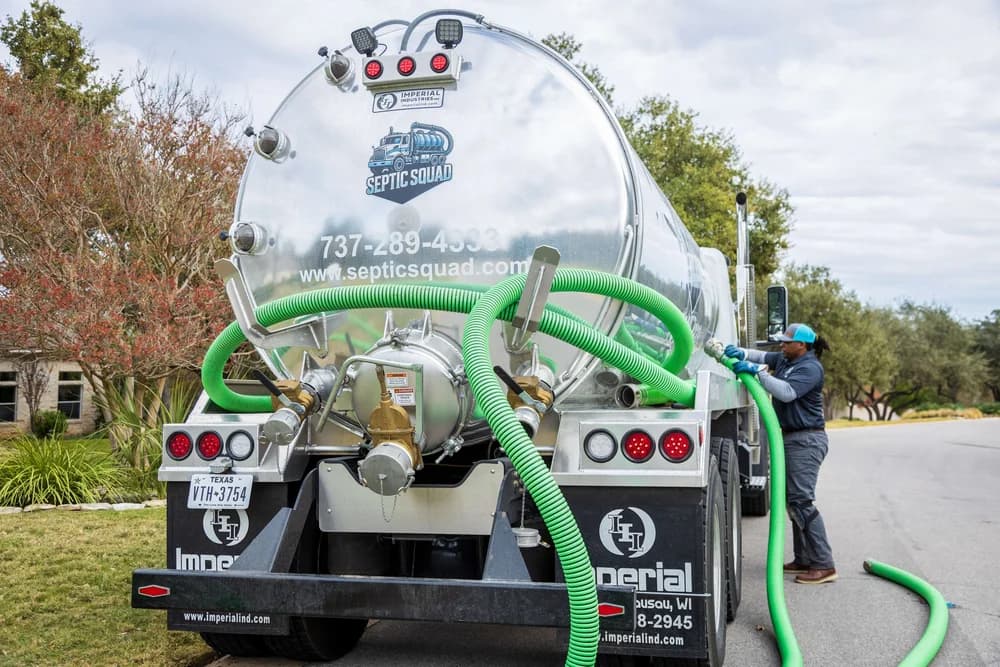
Lift Station Pumping in Kyle, Texas
Kyle has been one of the fastest-growing cities in Texas, and most of that growth has spread across the flat, deep Blackland soils east of I-35. Flat ground is hard on gravity sewer: lines have to keep falling, so over a long run they get deep, and lift stations are how a growing city brings them back up. Many of Kyle's subdivisions, and the retail centres along the interstate and Kyle Parkway, drain through stations like these.
The interstate corridor brings grease. Fast-food and sit-down restaurants, grocery delis and coffee shops all send small amounts of grease past their traps, and a downstream wet well collects it into a mat that coats the floats. The subdivisions bring the low-flow problem common to growing cities — stations built for neighbourhoods at full build-out, carrying a fraction of that while homes are still being finished, with wastewater sitting long enough to go septic. And the clay moves: it swells in a wet spring and shrinks in a dry summer, and over time that movement works on buried pipe where it meets the walls of a well.
None of that shows from the surface until the alarm sounds. A regular clean-out is the inexpensive way to keep it from getting there.
Why Kyle calls Septic Squad
Kyle is on our regular Hays County route along I-35, so a station here is routine work rather than a special trip. We clear the whole well — grease mat, debris and floor solids — tell you straight what we saw of the floats and well, and help set an interval that matches how much flow the station actually carries today rather than what it was designed for.