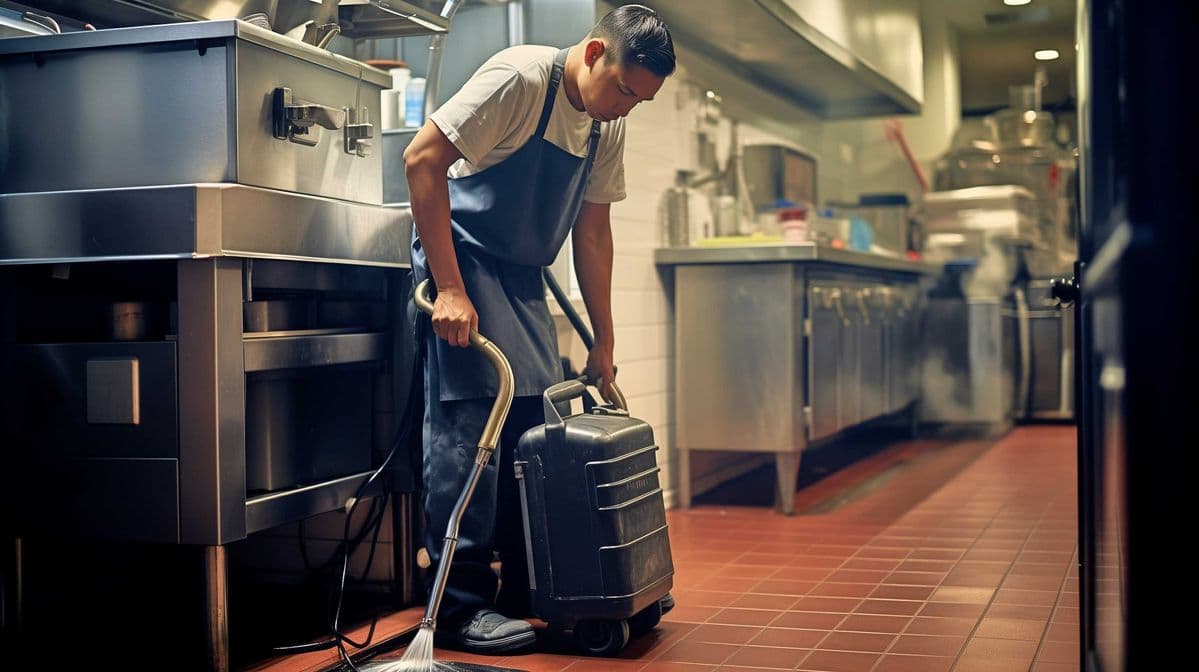
Septic Squad providing commercial grease trap cleaning at a Pflugerville, Texas property
Travis County

Grease Trap Cleaningin Pflugerville, Texas

Scheduled and emergency grease trap service for Pflugerville kitchens — full pump-outs, documentation for every visit, and hours that work around service.

Grease Trap Cleaning in Pflugerville

What to expect before you book.

County
Travis
Typical visit
30–60 min
Scheduling
Off-hours
Records
Every service
Call (512) 729-5861
Same-day windowsacross Travis County
Licensed & insuredTexas OSSF compliant disposal
5.0 from 249 reviewsLocally owned, 10 years
Local knowledge

Commercial Grease Trap Cleaning in Pflugerville, Texas

Pflugerville's commercial kitchens are a different customer from its septic ones, and it is worth being clear about why. The restaurants along Pecan Street, around Stone Hill Town Center and out toward the SH 130 corridor are overwhelmingly connected to the city sewer rather than sitting on tanks — which means the question is not what your drainfield can absorb, it is what you are allowed to send down the line. A grease trap sits between the kitchen drains and that sewer connection, slowing wastewater enough that fats, oils and grease float up and food solids settle out, so only relatively clean water carries on into the main. When the trap fills, that separation stops happening and grease passes straight through to harden inside your lateral and the public main beyond it.

That is the whole reason food service establishments are required to maintain traps rather than simply have them. Grease is the largest single cause of sanitary sewer blockages, and a blockage traced back to your property is yours to pay for. Pflugerville runs its own wastewater utility, so the pretreatment expectations that apply to a kitchen here come from the city rather than from Austin Water — worth confirming your specific requirement with them, because it is set locally and it is the standard a health inspector will expect to see you meeting.

The benchmark almost everyone works to is the 25% rule: clean the trap before accumulated grease and settled solids reach a quarter of its total capacity. Past that point retention time drops far enough that separation effectively stops, even though the trap is nowhere near physically full. What that means as an interval depends entirely on your kitchen. A high-volume restaurant running a fryer through lunch and dinner can fill a small under-sink unit in weeks; a bakery or a coffee shop with limited hot food might comfortably go a quarter. Trap size swings it as much as volume does — a 20-gallon interior unit under the three-compartment sink and a 1,000-gallon in-ground interceptor out back are not the same job and do not want the same schedule.

Why Pflugerville calls Septic Squad

We clean the trap, we do not skim it. Taking off the floating grease layer and leaving the settled solids underneath is what makes the next interval shorter than the last one — so we empty the unit completely, scrape the walls and baffles, check that the flow control and inlet baffle are intact, and dispose of everything through approved Texas facilities. Every visit comes with documentation, because that is what an inspector asks for and what a pretreatment programme expects you to have on file. And we work around your kitchen: before open, after close, or in the mid-afternoon lull. A standing schedule at the right interval costs a fraction of a single emergency call-out during dinner service.

The essentials

Grease Trap Cleaning in Pflugerville: what to know

Compliance

Pflugerville sets its own pretreatment terms

The city operates its own wastewater utility, so a Pflugerville kitchen's grease requirements come from the city rather than from Austin's programme — a distinction that catches out operators moving a concept up from central Austin. Confirm your required interval and record-keeping with the city, and keep the service documentation on file. We provide it for every visit whether or not anyone has asked for it yet.

Trap sizing

Interior traps and in-ground interceptors

Older Pflugerville storefronts and the smaller units in the retail centres typically run interior traps in the 20 to 50 gallon range, sitting under or near the three-compartment sink. Purpose-built restaurant space, especially the newer construction, is far more likely to have an in-ground interceptor of several hundred gallons or more outside the building. Interceptors hold much more and go longer between cleanings, but each cleaning is a larger job — so the right schedule is set from the unit you actually have, not from a rule of thumb.

Scheduling

Around service, not through it

Most cleanings take 30 to 60 minutes, which fits comfortably into a pre-open or post-close window. We would rather book you a standing slot at an interval that actually matches your volume than have you call us at seven on a Friday with a floor drain backing up. If you are not sure what your interval should be, we will look at the unit and your volume and give you a real number instead of a default.

What you get

What a Pflugerville visit covers

A complete pump-out

The whole unit emptied, not the floating layer skimmed. Settled solids are what shorten your next interval.

Walls and baffles scraped

Hardened grease left on the walls reduces working capacity from the first day after a cleaning.

Flow control and baffle check

Both are common failure points, and a trap with a damaged inlet baffle stops separating properly long before it fills.

Documentation every visit

Proof of service and approved disposal, which is what a health inspector and a pretreatment programme expect you to keep.

Scheduled maintenance plans

Monthly or quarterly standing slots, so the interval is handled without anyone in the kitchen having to remember it.

Emergency call-outs

If a trap is overflowing or a kitchen drain has stopped, we run 24/7 and will get to you the same day.

Questions

Grease Trap Cleaning in Pflugerville: common questions

How often does a Pflugerville restaurant need its grease trap cleaned?

Most commercial kitchens land somewhere between monthly and quarterly, but the honest answer is that it depends on your trap size and your volume rather than on your zip code. The working benchmark is the 25% rule — clean before grease and solids reach a quarter of capacity. A busy kitchen with a small interior trap may need it monthly; a low-volume operation with an in-ground interceptor may be fine quarterly. We will assess yours and give you a real interval.

Who regulates grease traps in Pflugerville?

Pflugerville operates its own wastewater utility, so the pretreatment expectations for kitchens discharging to the city sewer are set by the city rather than by Austin Water. Confirm your specific requirements and record-keeping obligations with them. Whatever they ask for, keeping documentation of every cleaning on file is the part that matters practically, and we supply it as standard.

Can you clean the trap without closing my kitchen?

Yes — that is the normal case. Most cleanings run 30 to 60 minutes and we schedule them before open, after close, or during the mid-afternoon lull. We would rather work around your service than through it.

What is the difference between a grease trap and an interceptor?

Broadly size and placement. Traps are the smaller units installed indoors, usually right by the sinks they serve. Interceptors are large in-ground tanks outside the building that handle the whole kitchen's flow. Interceptors hold far more and are cleaned less often, but a cleaning is a bigger job. Both are covered here.

What happens if I let the trap go too long?

Grease stops separating and passes into your lateral line, where it hardens. That produces slow kitchen drains, odours that reach the dining room, and eventually a blockage — in your line, or in the public main, where the cost of clearing it can land back on the property it came from. It also puts you outside whatever interval your programme expects, which is a problem at inspection time. A standing schedule is meaningfully cheaper than any one of those outcomes.

Do you serve food trucks and smaller kitchens?

Yes — restaurants, bars, food trucks, schools, care homes and commercial kitchens of any size across Pflugerville and Travis County. Small units are quick jobs and we are happy to fold them into a route rather than treating them as too small to bother with.

Nearby

Other areas we serve

Communities close to Pflugerville, each with its own local guide.

Call Now💬 Get an Estimate
Book Online